Products
Choose Your Custom Pouch
who we are
Resources
My cart

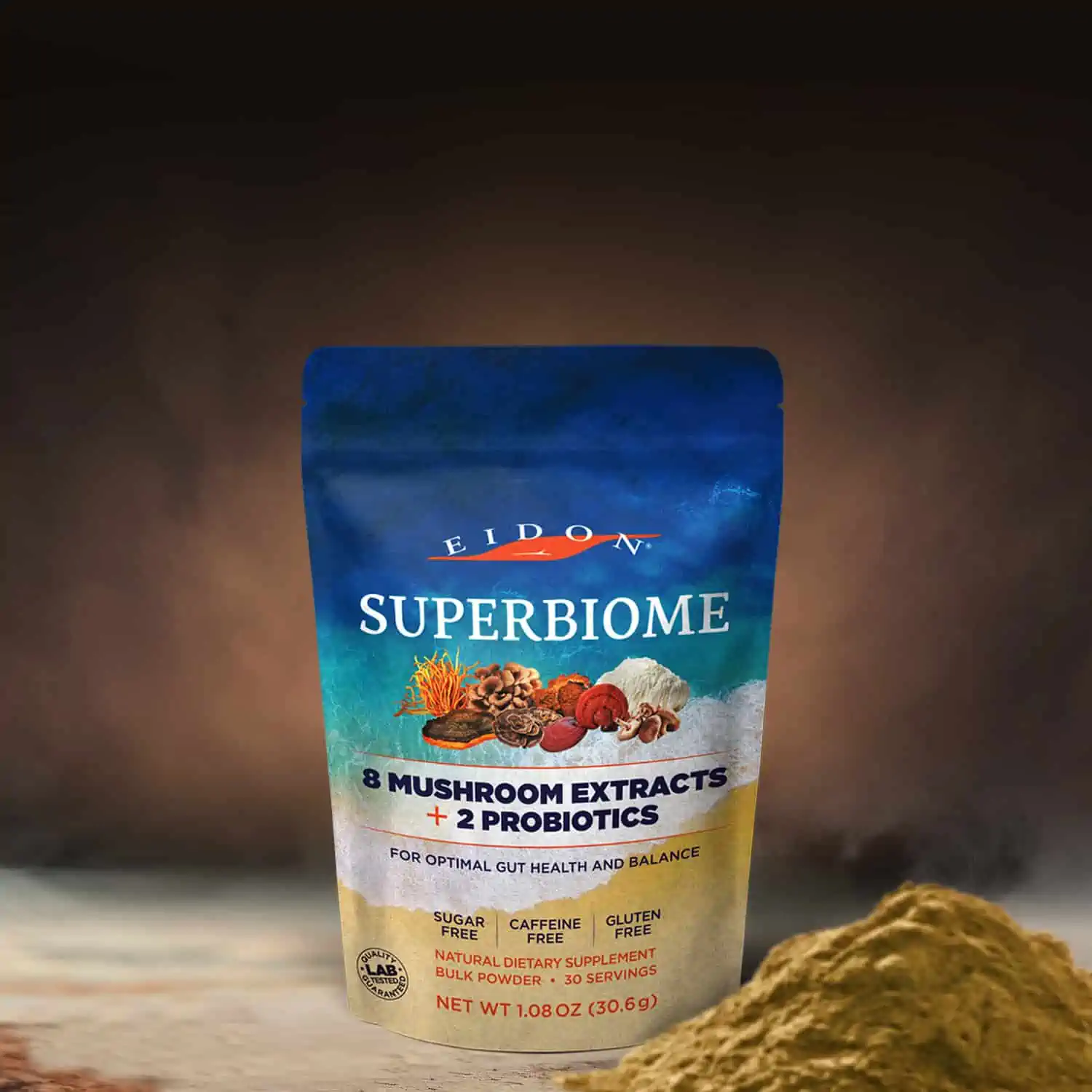



What brands ask us before their first supplement run: minimums, barrier, sealing and what actually keeps the product the way you made it.
One hundred per design on stand-up, flat and pillow pouches, which covers a pound of protein and everything smaller. Flat bottom, quad seal and side gusset bags start at 500 per design. A design is one flavor or formula with its own artwork, so chocolate, vanilla and unflavored whey is 300 bags, not 100. Digital print lets each design run its own quantity. Keep a new formula at 100 while the proven flavor runs at 1,000, and you find out what sells in a finished printed bag instead of a stock pouch with a label.
Bigger than most people expect, because protein powder is light for its weight. Using our sizing engine's figure for whey isolate, one pound needs a stand-up pouch of about 7.3 by 11 inches with a 3.7 inch bottom gusset. Collagen and greens powders are lighter again and need more room for the same weight, while creatine and electrolyte powders need less. For two pounds and up, ask us about a flat bottom bag. It stands on a box base and can take an e-zipper, whose wider track is easier to grip across a wide opening. Send the fill weight and the product and we size it.
A standard zipper can. Each scoop leaves a little powder on the zipper, and it builds up until the two sides no longer press shut. For protein, collagen and greens powders we offer a fine-powder zipper instead, made to keep closing when powder gets into it. It is available on flat pouches and stand-up pouches. Ask for it on the quote whenever the product is a fine powder. A bag that still shuts near the last scoop keeps the powder dry, and keeps your pouch on the counter instead of being emptied into a tub.
Moisture comes first. A powder that takes on moisture clumps, and our material calculator also flags supplements for oxygen and light. That is why an opaque metallized film is our default for supplements: it covers all three in one structure. Solid aluminum foil is the step up when stock has to sit for a long time. Kraft carries the same metallized liner behind the paper if you want a natural look. Give us the product and the shelf life you need on the quote, and the film is matched to your formula rather than to a generic spec.
Yes. You can have a window in a metallized bag, a clear front with a metallized back, or a fully clear bag. Whatever is clear lets light through, so we treat supplements as light-sensitive, and a clear bag comes with a note to keep it out of direct light. For a fully clear bag that has to hold for a long time, AlOxPET is the clear film that is strong on both moisture and oxygen. A small window costs you little protection. A fully clear bag gives up the light barrier completely. Pick on how long the product has to hold and how much seeing it helps the sale.
By count, not by weight. Tell us the capsule size, such as 00 or 0, or the dimensions of one tablet or gummy, and how many go in each bag. Pieces do not settle the way powder does, so the bag is sized around the count, with the strip at the top that the zipper takes allowed for. If you already have a size in mind, we quote it alongside the size we suggest so you can compare them. The result is a 60-count pouch that looks properly filled on the shelf, not a big bag with the product sitting in the bottom.
Yes, both. A single-serve sachet is a small flat pouch with a tear notch, opened once, and it starts at 100 per design like any flat pouch. We also make finished stick packs printed to your artwork, a good fit for powders, drink mixes and other single servings. Like a pillow pouch, a stick pack takes no zipper. Ask us for the minimum on your stick size when you quote. If you run your own form-fill-seal machine, we print roll film instead, starting at 100. A single-serve run lets you put a new flavor in customers' hands before you commit to a full-size bag.
We print the whole bag to your artwork, so the supplement facts panel, directions, barcode and a batch and lot area go where you place them, and you approve a proof before anything prints. What the panel must say is for you and your regulatory adviser to decide. The layer against your product is food-grade polyethylene or cast polypropylene, and the inks sit on the outside of the laminate with the barrier layers between them and the product. We can supply a Certificate of Analysis, a food contact declaration and a safety data sheet on request. Ask for them with the quote.
Yes, as long as you accept what it gives up. Recycling needs a bag made from one plastic family, and ours is mono-PE, either plain or with an EVOH layer that adds oxygen barrier. The metallized and clear laminates we normally quote bond different plastics together, so they are not recyclable. Both mono-PE options are clear, which removes the light barrier, and plain mono-PE is only fair at keeping moisture out, the thing a powder needs most. A compostable kraft bag exists as well, but it is low on both moisture and oxygen. Ask and we will quote the recyclable build beside a metallized one.