Products
Choose Your Custom Pouch
who we are
Resources
My cart




What brands ask us before their first nut run: minimums, barrier, sealing and what actually keeps the product the way you made it.
Mainly a barrier against air, because nuts are mostly oil and oil goes rancid when oxygen reaches it. Light speeds up the same reaction on its own, so a nut in a clear bag on a bright shelf has two things working against it. Moisture is the third, since it softens a roasted nut. A metallized film holds out all three, and it is our standard for nuts. Aluminum foil is the step up, kept for a long shelf life with a real risk rather than used by default. Get this right and the last handful in the bag tastes as fresh as the first.
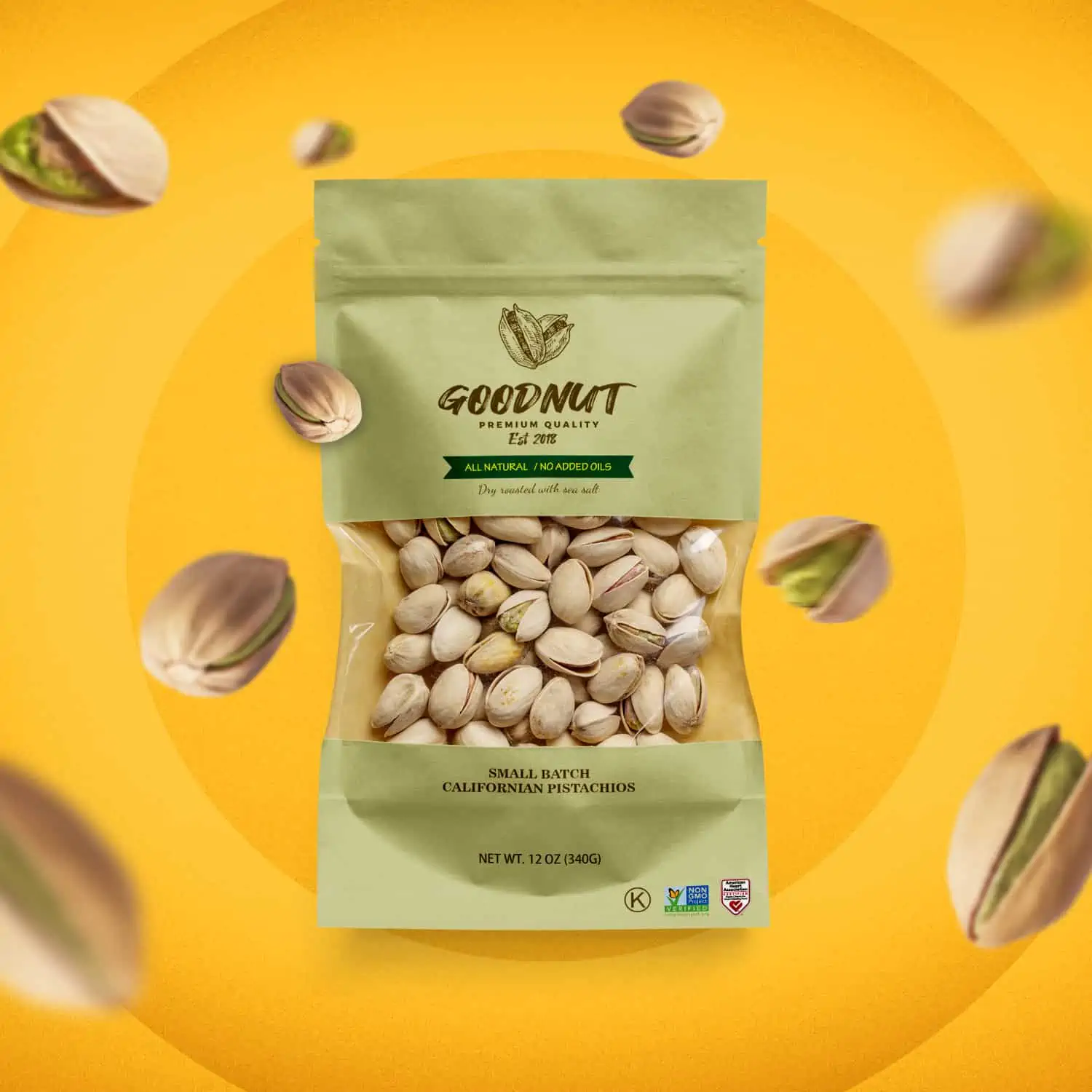
Yes. Seeing the nuts is part of what sells them, so it is worth doing, as long as you choose the trade on purpose. A window on a metallized bag keeps full barrier everywhere except the window itself. That build needs a larger run than a plain bag, and we quote its minimum per job. A clear front with a metallized back shows the whole face and keeps the barrier across the back. A fully clear bag gives up the light block, and if it has to be clear and last, AlOxPET is the clear film that holds out air and moisture. Whichever you choose, keep the display out of direct sun.
Yes, but it changes more than the look. Behind the paper, our standard kraft bag carries a metallized liner, and that liner does the barrier work. A window needs clear film behind it, so a windowed kraft bag switches to a clear liner across the whole bag, not only behind the window. That leaves the nuts with low protection from air and moisture everywhere. If the kraft look and a window both matter, ask us to quote it beside a clear front, metallized back bag, so you can weigh the two side by side before anything is printed.
This is where nuts get awkward. Foil will not pass an inline metal detector, because it is solid metal. Metallized film is usually said to be too thin to set one off, but we have seen it stop a customer's line, so we treat it as a risk. That rules out the two films we would normally put nuts in. What passes is AlOxPET, a clear film with a ceramic coating and no metal in it, strong against both air and moisture. You lose the light block, so keep the packs out of direct light. Tell us who fills for you and we will check the film against their line.
Send the weight and the nut, because nuts do not all take the same room. Shelled peanuts pack tight. The same weight of peanuts in the shell needs about two and a half times the space, and pecan or walnut halves need about half as much again as shelled peanuts. That is why our nut quote form asks whether yours are shelled or in the shell. We size the bag to sit properly full on the shelf, not half empty and not straining at the zipper. Our bag sizing tool takes the same details if you want a size before you ask for a quote.
One hundred per design for stand-up pouches, flat pouches and pillow pouches. Flat bottom, quad seal and side gusset bags start at 500 per design. The count is per design rather than per order, so salted, unsalted and honey roasted in the same stand-up pouch are three designs and a 300-bag order. That is what lets you launch a whole flavor range in printed bags from the start, instead of putting a label on a plain bag three different ways.
The layer against your nuts is food-grade polyethylene or cast polypropylene, and the inks sit on the outside of the laminate with the barrier layers between them and the product. We can supply a Certificate of Analysis, a food contact declaration and a safety data sheet on request. Ask for them when you quote. Allergen statements belong to your label and your kitchen, so that wording stays with you, and we print it as part of your artwork. Having the film paperwork ready is what gets a nut brand through a retailer's or co-packer's vendor approval without a round of chasing.
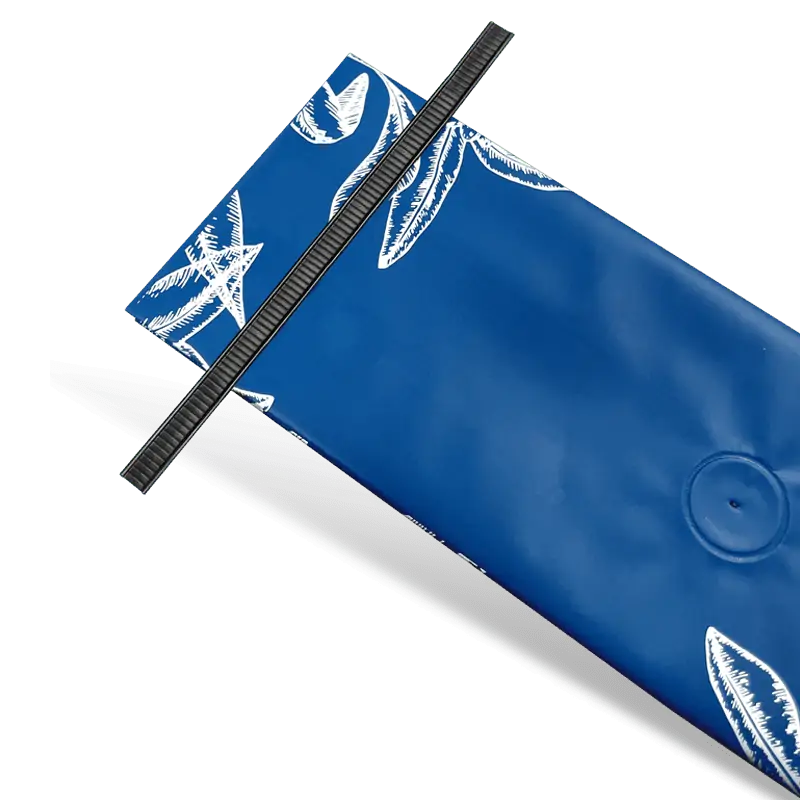
It follows how the nuts get eaten. A stand-up pouch with a zipper suits a share bag that gets opened and closed again and again, and it takes a window and a hang hole. Flat pouches and pillow pouches suit single-serve packs. A pillow pouch can carry a window but never a zipper, because it is wrapped from one sheet of film. Flat bottom bags give a larger bag a box-shaped base and take a standard zipper or a wider e-zipper, from 500 per design. Stand-up, flat and pillow pouches start at 100 per design.