Products
Choose Your Custom Pouch
who we are
Resources
My cart

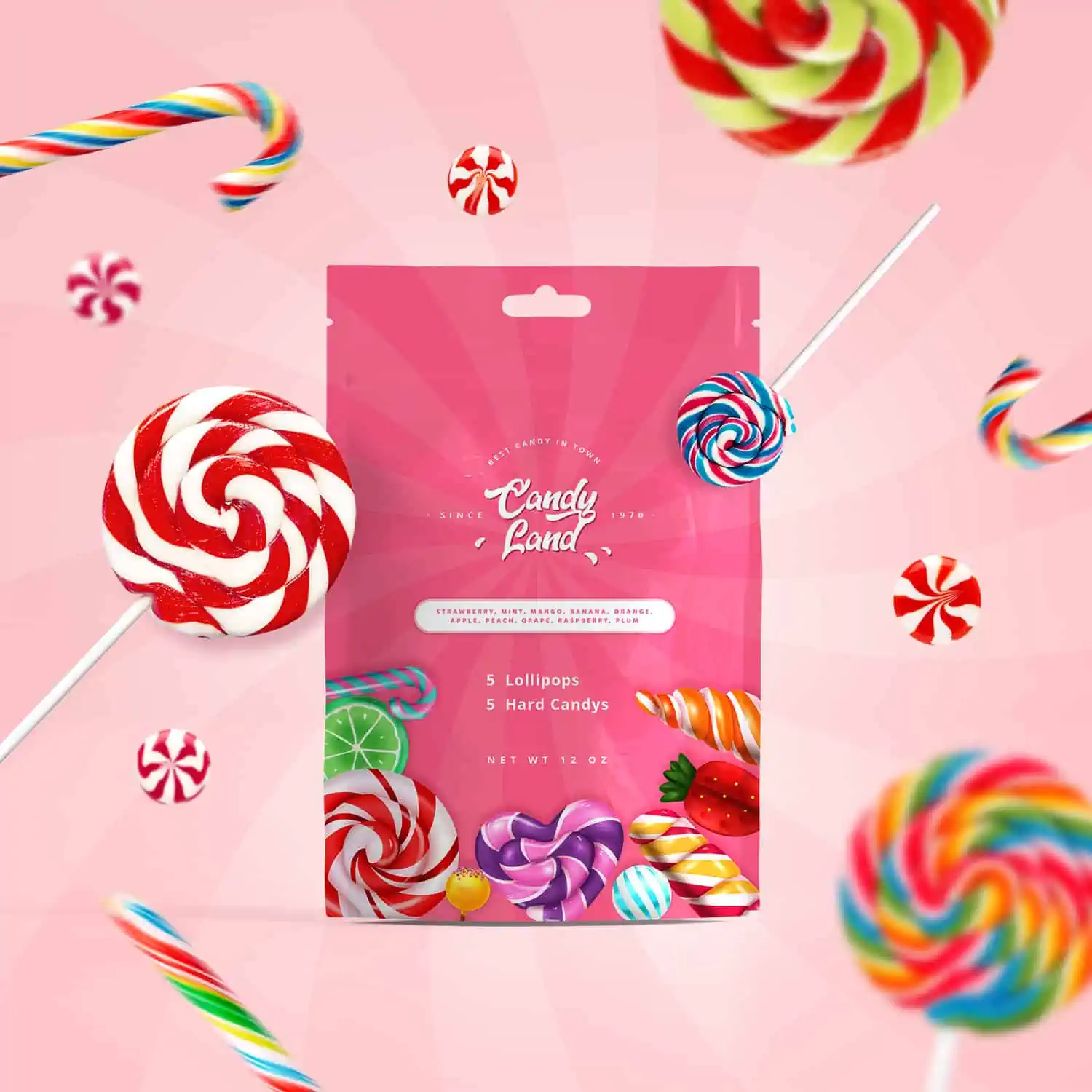




Bag size is decided by volume, not weight, so two products of the same weight often need very different pouches.
Hard candy and panned sweets pack tight and sit low in the bag. Gummies and marshmallow are far bulkier for the same weight and need more headroom. Aim to fill roughly 70 to 90 percent of capacity: any lower and the pouch looks half empty on shelf, any higher and it will not seal cleanly. Tell us what you are packing and how much goes in one bag, and we will size it.
Takes about a minute. Not sure of the fill weight? Put one bag's worth in a ziplock and weigh it.
What brands ask us before their first candy run: minimums, barrier, sealing and what actually keeps the product the way you made it.
One hundred per design for stand-up pouches, flat pouches and pillow pouches. Side gusset, quad seal and flat bottom bags start at 500 per design. It counts per design rather than per order, so a four-flavor range is four lots of 100. That is enough to put a properly branded range in front of a buyer without committing to thousands of units per SKU. We manufacture and print the bag against your artwork: this is a production run for a candy brand, not a stock bag with a sticker on it.
Yes, and it is what keeps your candy tasting the way it did the day you made it. Hard candy and panned candies pull moisture out of the air, so without a barrier they turn tacky and weld into a single lump. Gummies, caramels and marshmallow have the opposite problem: they lose their own moisture, go hard, and a white sugar bloom comes up on the surface. A barrier film holds both in place. That is what lets you quote a shelf life to a retailer, ship through a humid summer, and have the last bag in the case sell as well as the first.
A plain clear PET/PE bag looks good and does very little on moisture. If the bag has to stay see-through, a three-layer BOPP/PET/CPP film is the cheap fix. It is much stronger on moisture and weaker on oxygen, which is usually the right trade for candy. It uses a polypropylene sealant, so it seals hotter than a PE bag. For longer holds there is AlOxPET, a clear ceramic-coated film that is strong on both. Either way you keep the candy visible, which is what sells it, without the tacky-bag complaint coming back through your reviews.
A zipper is what lets your customer close the bag and come back to it, which is what you want for anything eaten over a few days rather than in one sitting. It keeps your pack on the counter instead of the contents in someone's jar. It works with the seal rather than instead of it: the bag ships airtight because the top is heat-sealed above the zipper, and that strip comes off on first open. From then on the zipper is what protects the candy day to day, and the film is what carries the unopened shelf life.
Made up and empty, with the bottom and sides already sealed and the top open. You fill and heat-seal the top yourself, or your co-packer does. A polyethylene seal layer closes in roughly the 250 to 350°F range. The clear BOPP/PET/CPP moisture film has a polypropylene seal layer, and that runs hotter. On candy the seal matters more than the film grade, because a wrinkle or a channel lets humid air straight in and the candy goes tacky from there. Get the seal clean and unbroken and every bag in the run holds up the same way.
Yes. Mono-PE with an EVOH layer is made from a single plastic family, and it is the recyclable option we would quote you. A standard laminate, clear or metallized, bonds different plastics together and is not recyclable. Be clear on the trade. EVOH is an oxygen barrier and candy is mostly a moisture problem, so this is the sustainable choice rather than the strongest one on moisture. For moisture alone, a three-layer BOPP/PET/CPP film is still the answer. If a recycling claim on pack matters to your retailer, this is the film that supports it honestly.
The layer against your candy is food-grade polyethylene or cast polypropylene, and the inks sit on the outside of the laminate with the barrier layers between them and the product. We can supply a Certificate of Analysis, a food contact declaration and a safety data sheet on request. Ask for them with the quote and they arrive with the order. That is what gets you through a retail buyer's vendor qualification first time, instead of holding up a listing while you chase paperwork after the fact.
That is usually the better answer. A window on an otherwise metallized or foil bag shows the product while keeping full barrier over everything else, so you get the impulse buy without paying for it across the whole pack. The window itself is a hole in that barrier, so the candy right behind it sees more moisture and light. Keep it small, and keep it off anything that fades. A clear pillow pouch takes a window at no extra cost, from the same 100 per design. On a foil or kraft pillow pouch, or a side gusset bag, ask when you quote.
Stand-up pouches for anything sold by the bag off a shelf: they stand up unaided, which is what wins the facing, and they take a zipper and a hang hole. Flat pouches suit counter and checkout formats. Pillow pouches, sometimes called wrappers, are the cheapest per unit for single-serve and share packs, but take no zipper and no tin tie because they are one piece of film wrapped into a tube. Stand-up, flat and pillow start at 100 per design. Side gusset, quad seal and flat bottom start at 500.