Products
Choose Your Custom Pouch
who we are
Resources
My cart











Bag size is decided by volume, not weight, so two products of the same weight often need very different bags.
A pillow pouch is one web of film wrapped into a tube, so it is the cheapest format per unit. It has no gusset, which means the product's depth pushes the bag wider rather than deeper. Aim to fill roughly 70 to 90 percent of capacity: any lower and the bag looks half empty on shelf, any higher and it will not seal cleanly.
Takes about a minute. Not sure of the fill weight? Put one bag's worth in a ziplock and weigh it.
What brands ask before choosing a pillow pouch: what it can take, how it compares, and what it costs to start.
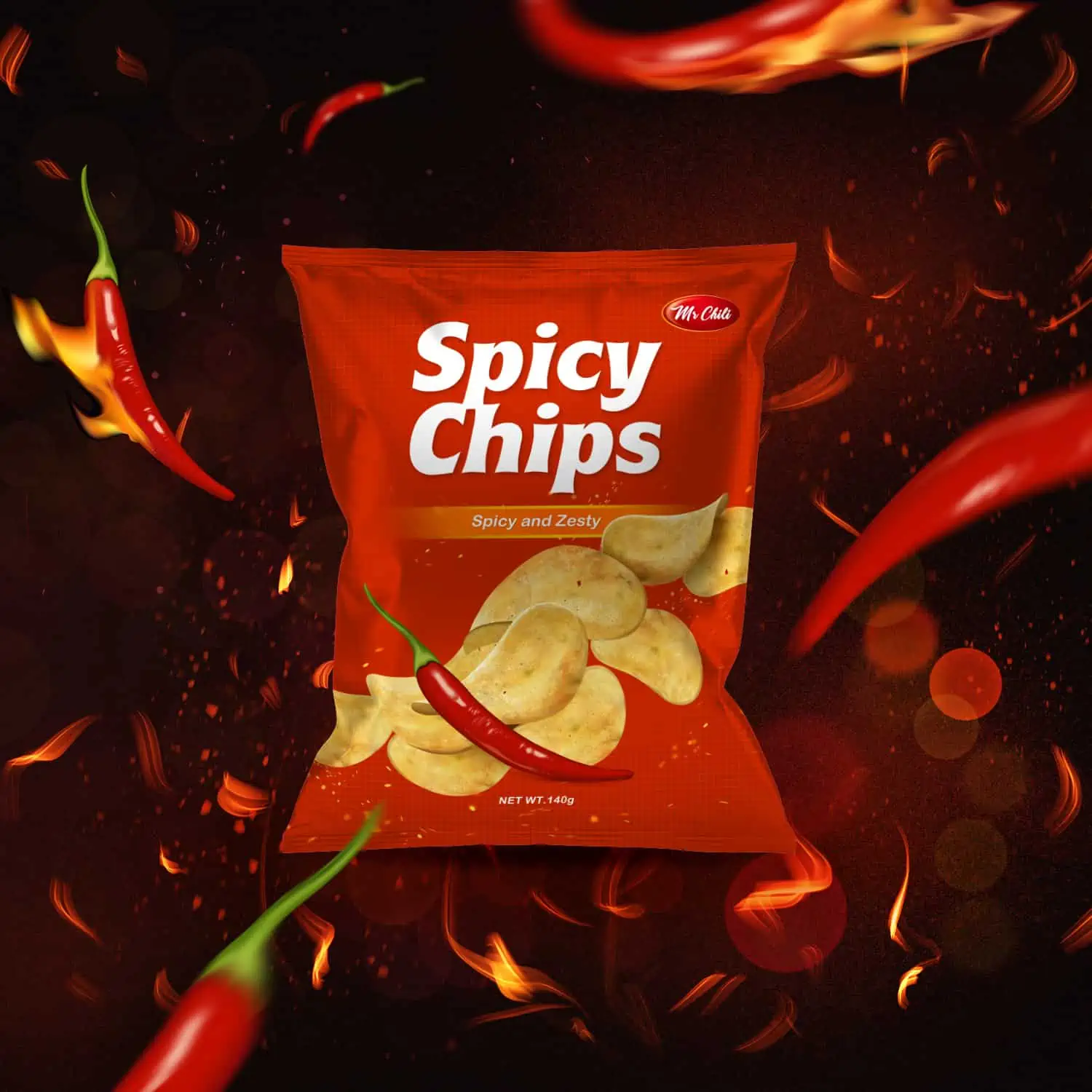
Same bag, different names. A pillow pouch is one web of film wrapped into a tube, with a fin seal running down the back and a straight seal across the top and the bottom. Filled, it rounds out into the cushion shape that gives it the name. Customers call it a wrapper, a flow wrap, a fin seal bag or simply a chip bag, and it is the most familiar snack shape on a shelf. It is also the simplest bag we build, which is exactly what makes it the cheapest per unit.
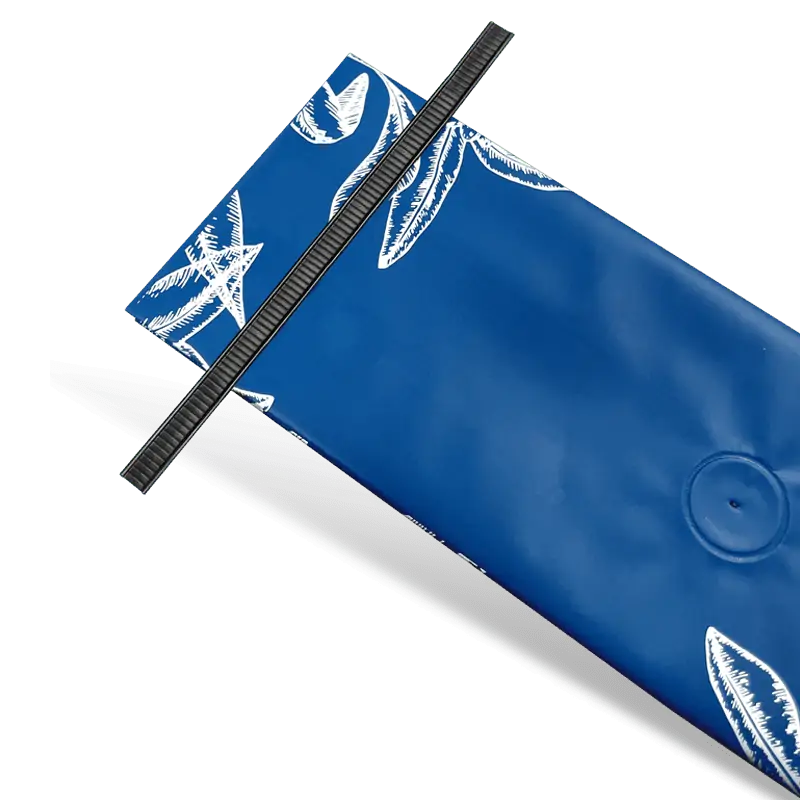
No to both, and it is worth knowing before you design around one. A pillow pouch is a single tube of film sealed top and bottom, with no side seams to anchor a zipper track into and no top structure to hold a tin tie. It is a single use pack: tear it open and it stays open. If your product gets eaten over several days and has to reclose, a flat pouch or a stand-up pouch takes a standard press to close zipper, and both start at 100 per design, the same minimum as this one.
One hundred per design. Flat pouches and stand-up pouches are also 100. Side gusset, quad seal and flat bottom bags start at 500, because those constructions take more converting. It counts per design rather than per order, so a four flavor range is four lots of 100. That is low enough to put a real printed range in front of a buyer or a distributor without committing to thousands of units per SKU, and every one of them is manufactured and printed to your artwork rather than labeled onto a stock bag.
You choose left or right, and it is the spec people forget. The fin seal is the raised seam running down the back of the bag, and it occupies a strip of the back panel, so your ingredients block, barcode and nutrition panel have to be laid out around it rather than under it. Tell us the side at quote stage and the artwork is built to suit from the start. Leave it unsaid and the back panel usually comes back for a revision after the proof, which is the one part of this format that costs people time.
Different answers to the two halves. Mixed materials, no. A pillow pouch is wrapped from a single web, so both faces are always the same film, and you cannot run kraft on the front with foil on the back the way a flat pouch can. A window, yes. On clear film we leave the window area unprinted, it costs nothing extra, and it starts at the same 100 per design. On a kraft or foil pillow pouch, ask when you quote, because we confirm those case by case.
Both, printed to the same artwork. If you run your own vertical form fill seal machine you are buying fin seal ready rollstock rather than finished bags, and the same laminates we make pouches from run as film, so the barrier does not change with the format. If you do not fill in house, the bags arrive made up and empty with the back and bottom already sealed, and you or your co-packer fill and seal the top. Rollstock follows the same minimums, from 100 per design.
Because there is less of everything in it. One web of film instead of two or three, no gusset to fold and seal, no zipper component, and the fewest converting steps of any format we build. It also runs happily at 80 to 100 micron for light products like chips, where our standard elsewhere is 120. On a single serve line where you are buying tens of thousands of bags, those differences land straight on your unit cost, which is why this shape has owned the snack aisle for decades.
A tear notch, which about three quarters of them carry. Or serrated seals across the top and bottom, which give an easy tear the full width of the bag without a separate notch. A hang hole for peg display, also on about three quarters, the highest share of any format we build. A window, which on clear film costs nothing extra. A degassing valve is possible but rare here, and rounded corners are uncommon. What it will not take is a zipper, a tin tie or mixed materials, all for the one reason: a single web wrapped into a tube.
It will not stand. A pillow pouch lies down or hangs on a peg, and if you need it to hold a facing on a shelf that is a stand-up pouch, also from 100. On size, a filled pillow pouch is shallower than people expect, roughly 30% of its width at the deepest point, so it needs more width and height than a gusseted bag to hold the same volume. Sizes commonly run from about 3 by 4 inches up to 10 by 14. Send the product and the fill weight and we will size it.