Products
Choose Your Custom Pouch
who we are
Resources
My cart







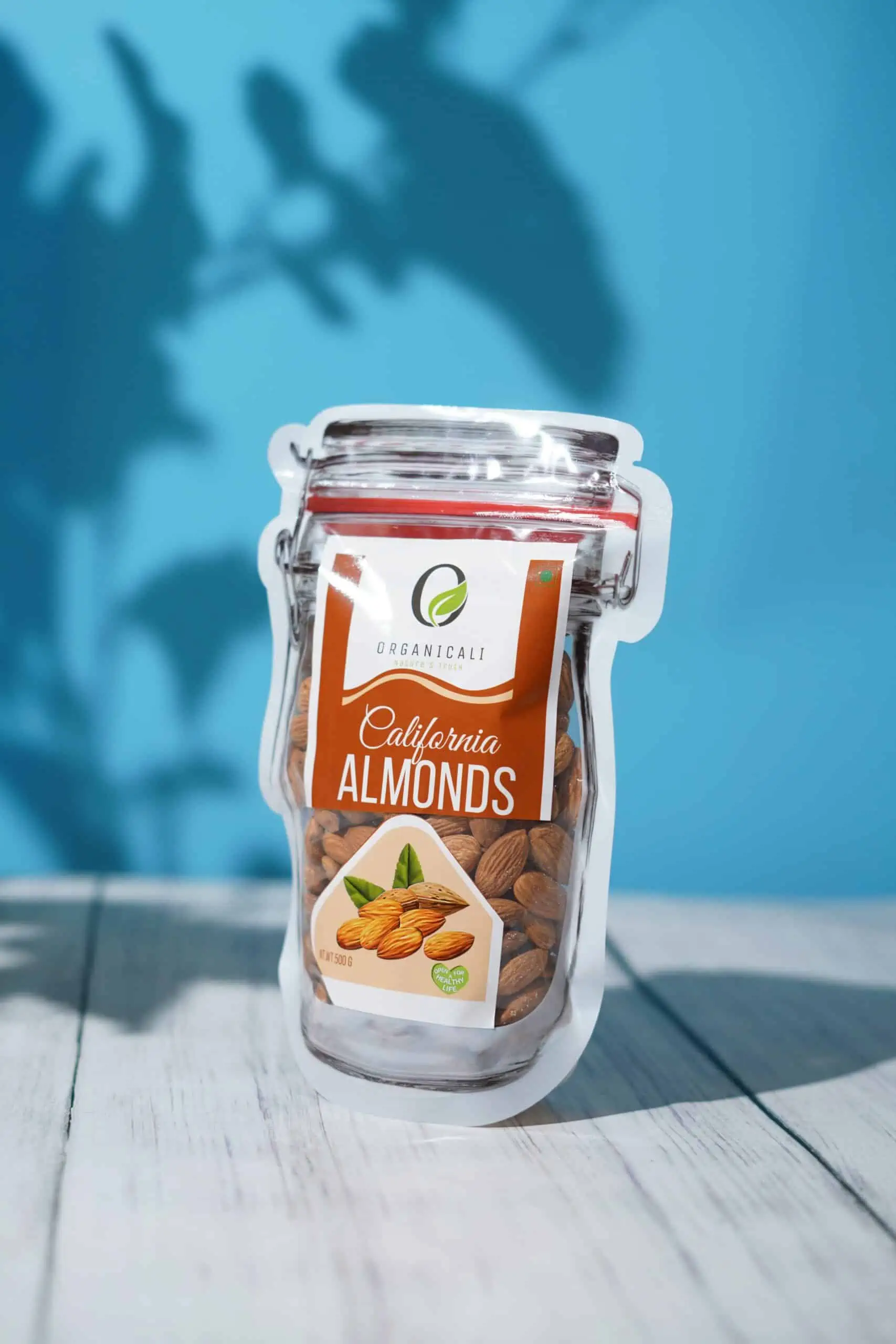
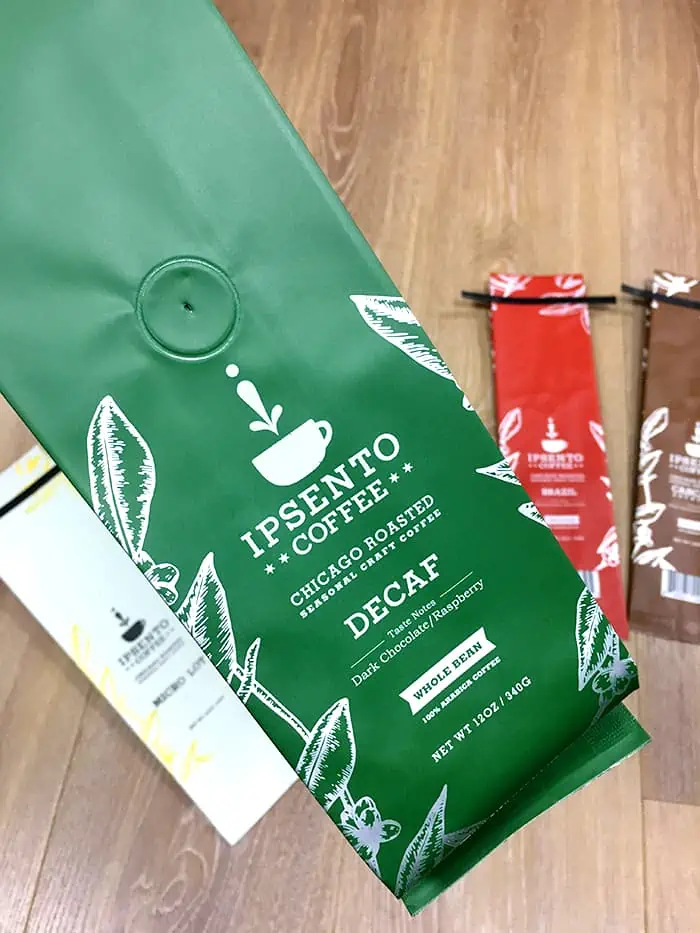
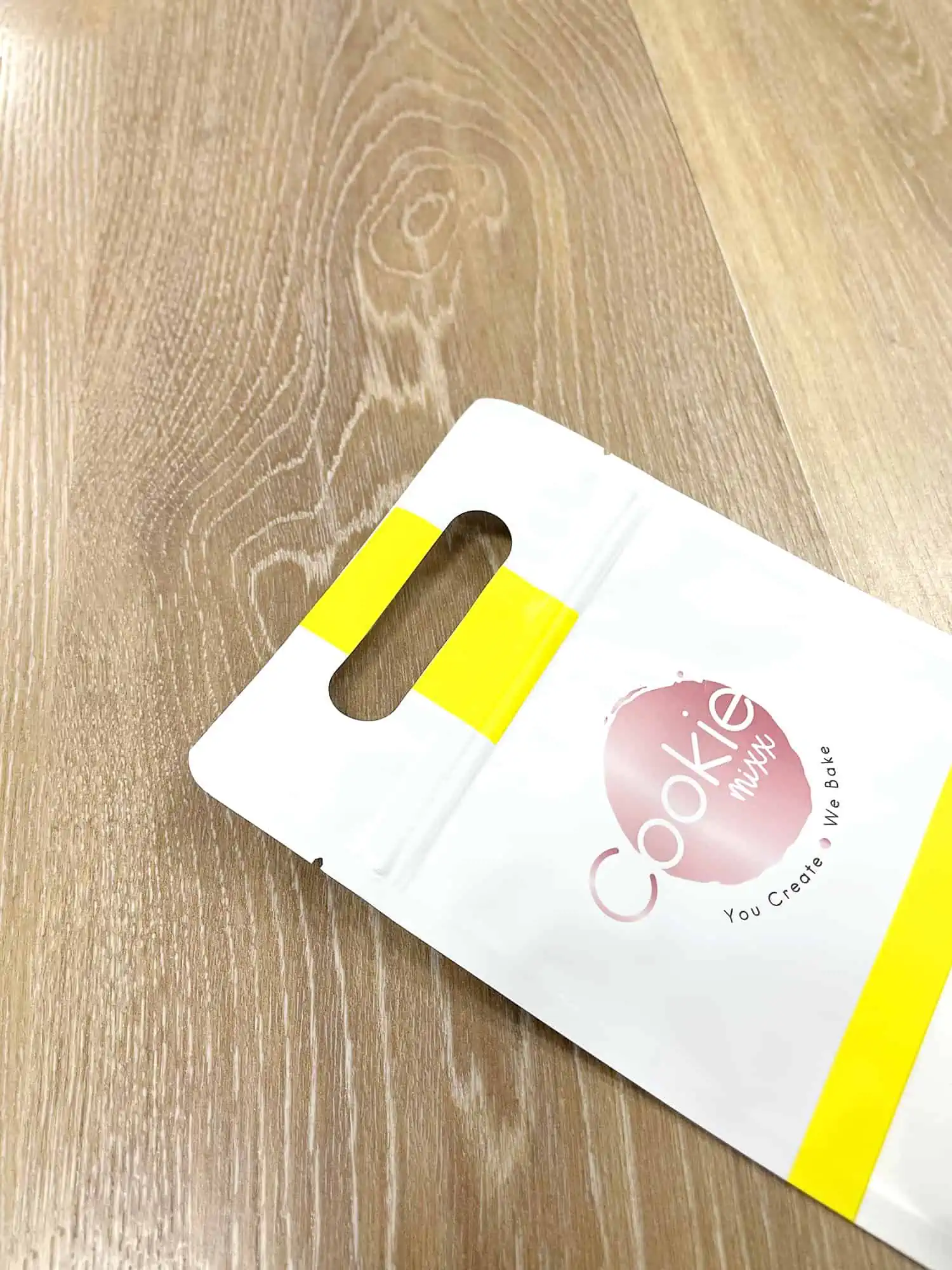

Bag size is decided by volume, not weight, so two products of the same weight often need very different bags.
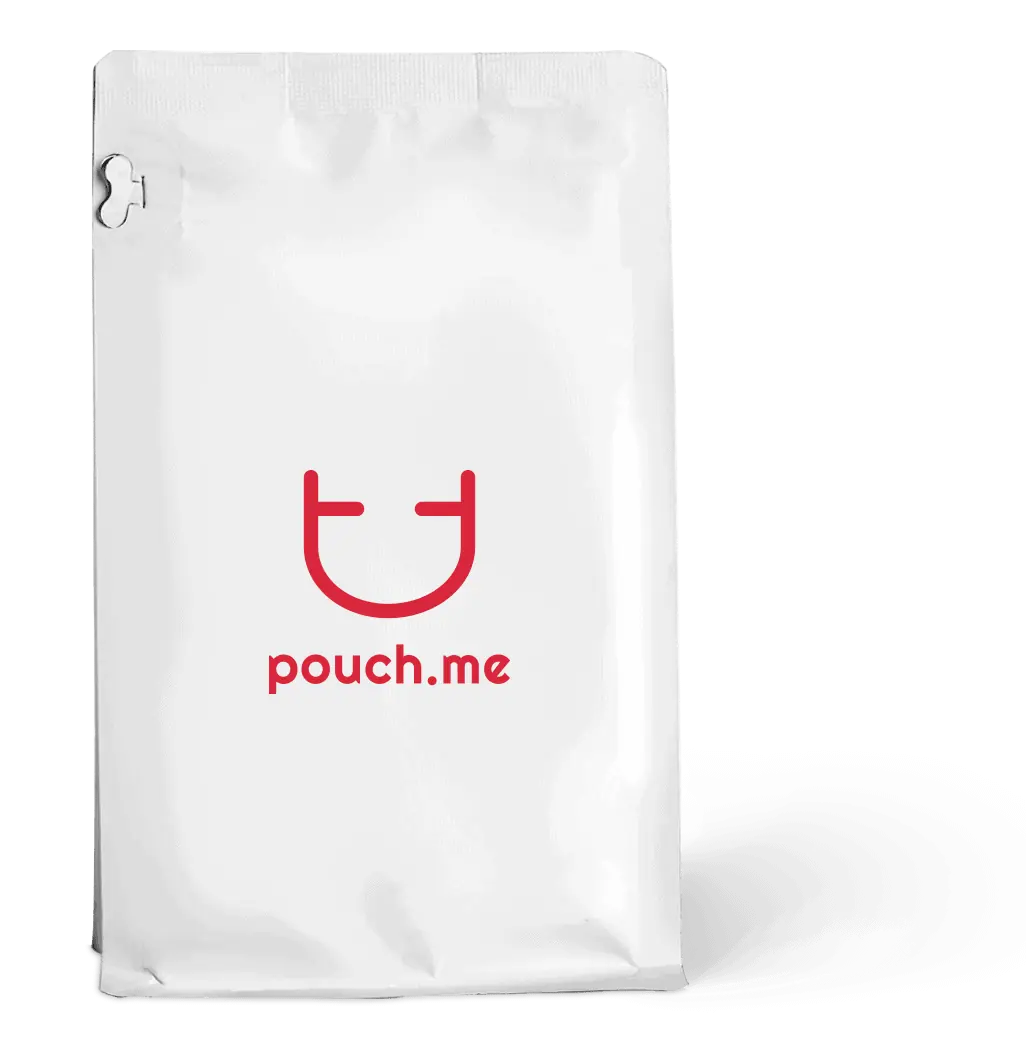
A flat bottom bag has a true square base and five printable panels, so it holds more in the same footprint than a stand-up pouch and stays upright when it is half empty. Aim to fill roughly 70 to 90 percent of capacity: any lower and the bag looks half empty on shelf, any higher and it will not seal cleanly.
Takes about a minute. Not sure of the fill weight? Put one bag's worth in a ziplock and weigh it.
What brands ask before choosing a flat bottom bag: what it can take, how it compares, and what it costs to start.
Because it has a true rectangular base, sealed in as its own panel, so it sits on a shelf like a small box. It is built from three webs of film, front, back and base, joined with eight sealed edges: four vertical corner seams and four horizontal ones. That gives five printable panels and a base that stays flat under load. You will see the same bag sold as a box pouch, a block bottom bag or an eight side seal bag. They are all the same construction, and it is the format that holds a facing best on a crowded shelf.
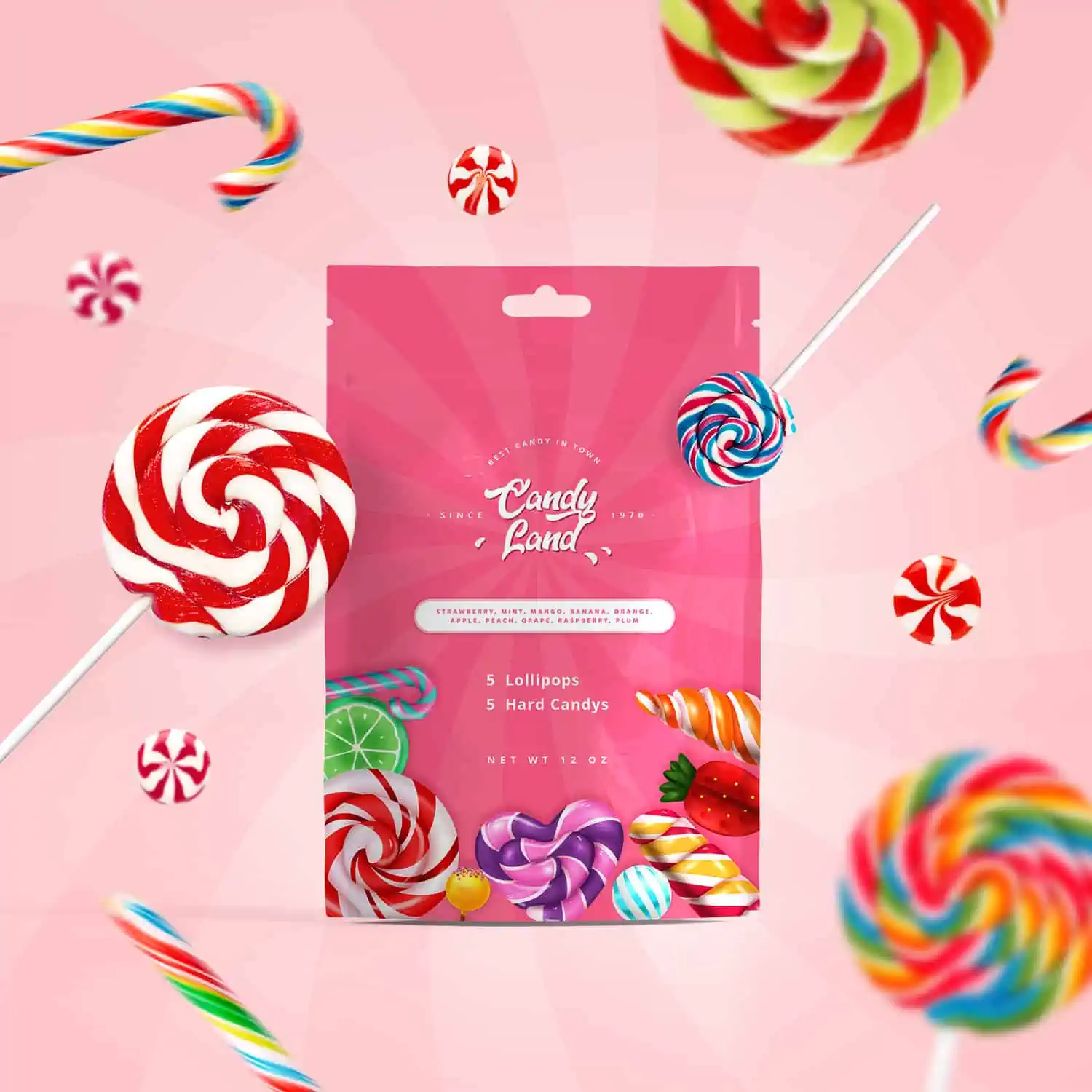
Yes. A stand-up pouch has a folded oval base, so the corners of its footprint are never really used. A flat bottom pouch squares those corners off and fills the whole outline, so more product goes into the same width and depth. It also keeps standing when it is half empty, where a stand-up pouch begins to lean. The trade is cost: eight seals and three webs of film is a longer build, and the minimum is higher. It earns that back on any product that has to look full right down to the last scoop.
On a wide rectangular mouth the e-zipper track, 8 to 12 mm against a standard 3 to 5 mm, is easier to grip and opens the bag across its full width. A standard zipper does work, but it pinches the opening on this shape, and people notice on a bag they open every morning. The thing to get right when you compare quotes: an e-zipper already has the opening function built in, so a tear notch and a perforation are not separate features on that bag and should not appear as extra lines on your price.
Five hundred per design on digital print. Three webs of film and eight seals take more converting than a simple bag, so the minimum is higher than on simpler formats. Pillow, flat and stand-up pouches start at 100 per design, and side gusset and quad seal are 500 like this one. Gravure, used for long runs, has its own minimum that depends on the bag size, and we quote it per job. It counts per design, not per order, so a four SKU range is four lots of 500. We print the bag to your artwork rather than putting a label on a stock bag.
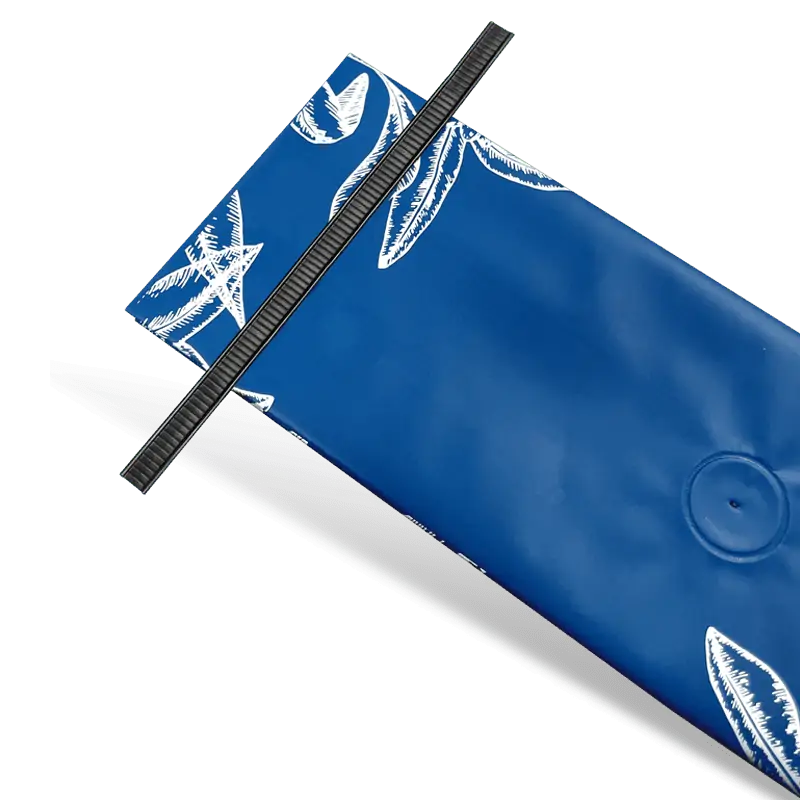
It is the modern premium coffee bag, and two thirds of the flat bottom bags we quote carry a degassing valve. A valve only works behind a barrier: metallized film, aluminum, or kraft with a barrier liner. On a clear film the oxygen comes straight through the wall and the valve achieves nothing. About a quarter carry a tin tie as well, folded over the top for day to day closing. Tell us on the quote that it is fresh roasted and we build the material and the valve together, so you can bag it the day it comes off the drum.
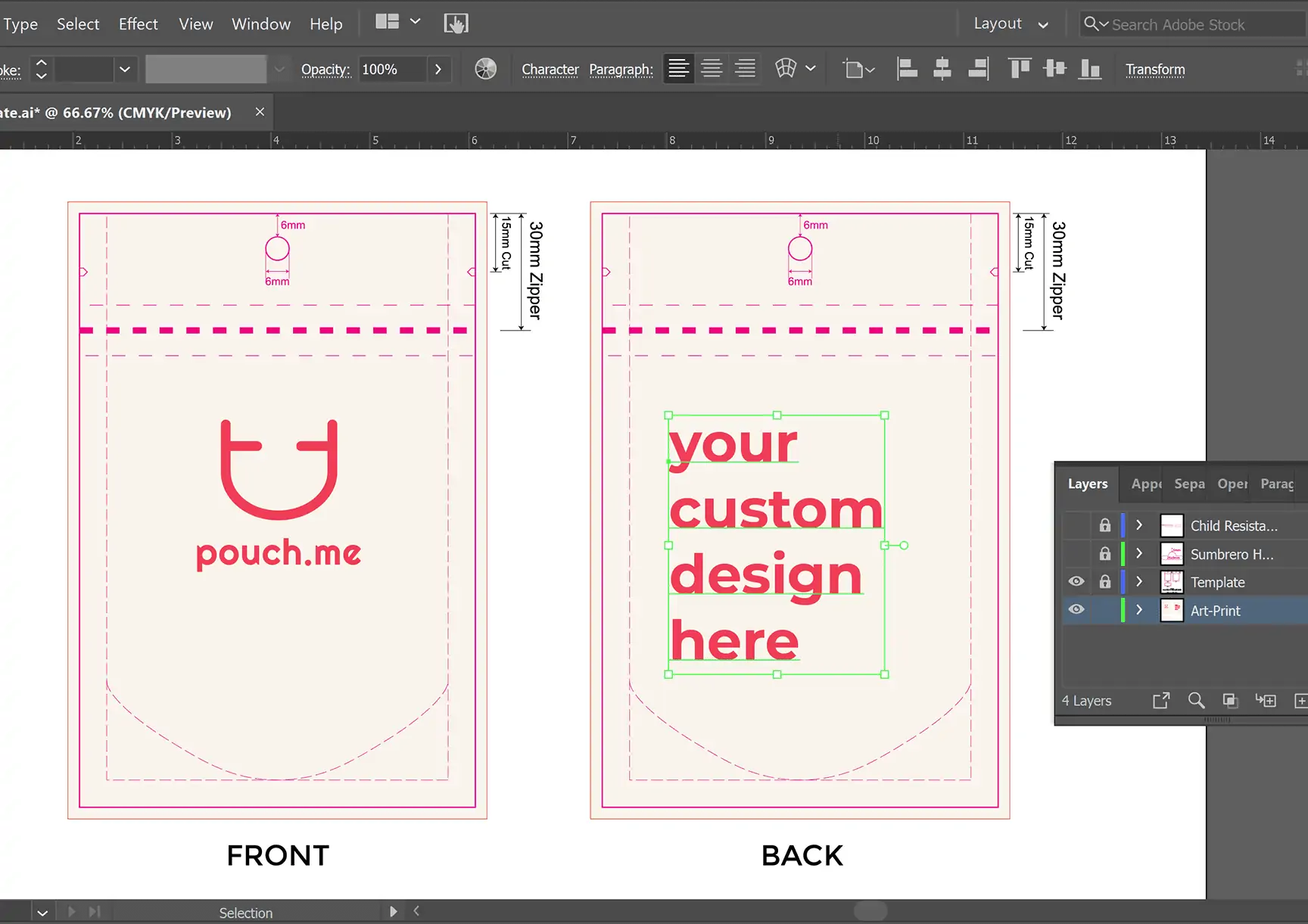
Front, back, two side panels and the base. Most brands put the mark on the front, ingredients and story on the back, and certifications, origin or a grind guide down the sides. The base is the one people forget, and it is visible on a low shelf and in every flat lay photograph. Seal areas are not printable, so keep anything that has to be read about 3 mm inside the seal line. We send a dieline with the safe zone marked on each panel. Five faces is more brand space than any other pouch format we build.
The base, and what the base does for you. A quad seal is formed with four corner seams and a folded bottom seam, so it boxes out toward square when full and softens as it empties. A flat bottom pouch has a separate base panel sealed in flat, which is what keeps it upright when it is half used, and it gives five printable panels against the quad seal's four. A quad seal is the simpler build and often the cheaper of the two on gravure. Both start at 500 per design, so the choice is about the shelf, not the budget.
About 5 inches wide by 6 inches high. Below that the base panel gets too small to sit flat, the format stops earning its cost, and an e-zipper will not fit either. Typical retail sizes run from 6 by 9 up to 8 by 12. If your product is smaller than that, a stand-up pouch or a flat pouch does the same job from 100 units rather than 500. Send us the product and the fill weight and we will size it properly, because volume decides the bag and weight on its own never does.