Products
Choose Your Custom Pouch
who we are
Resources
My cart











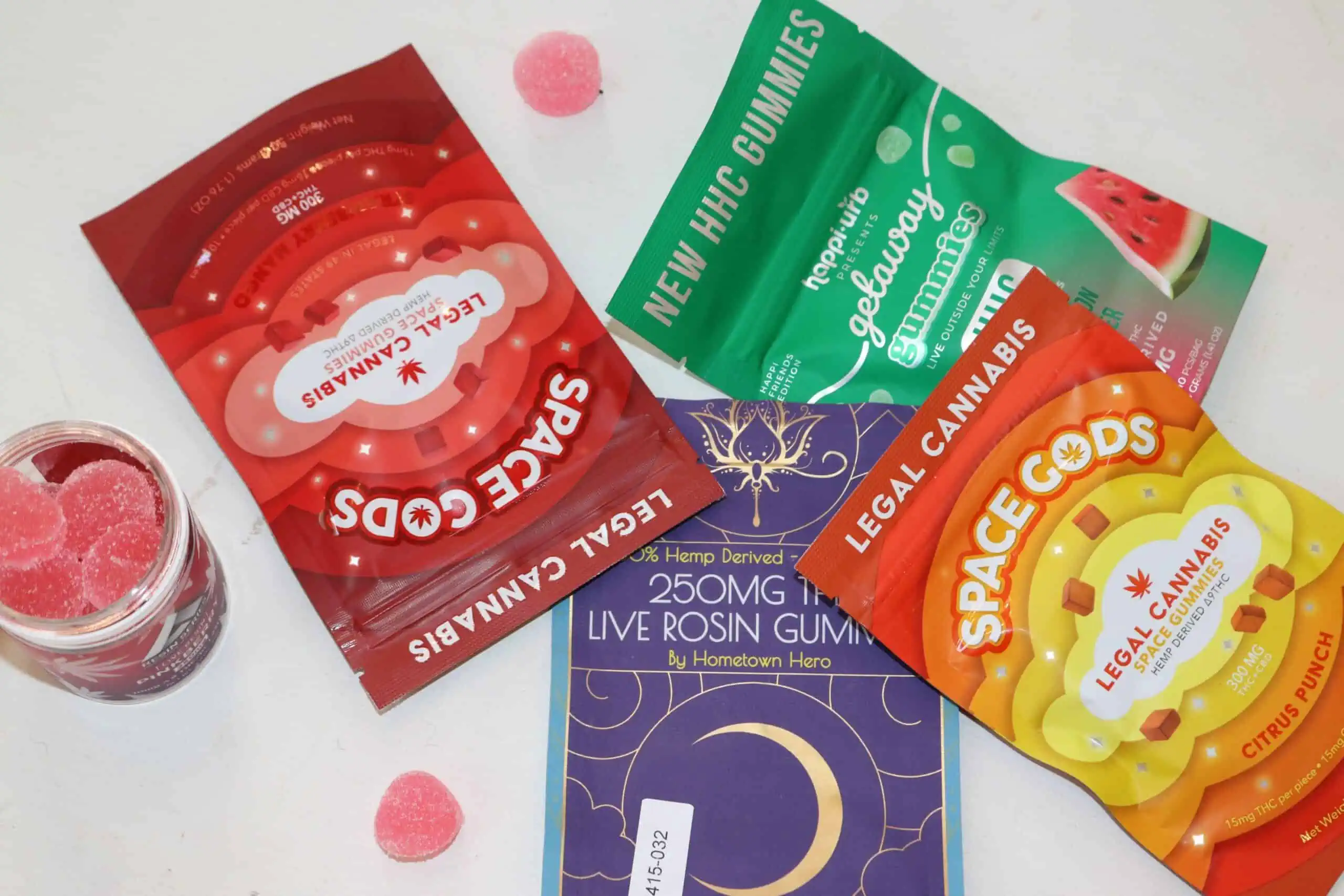

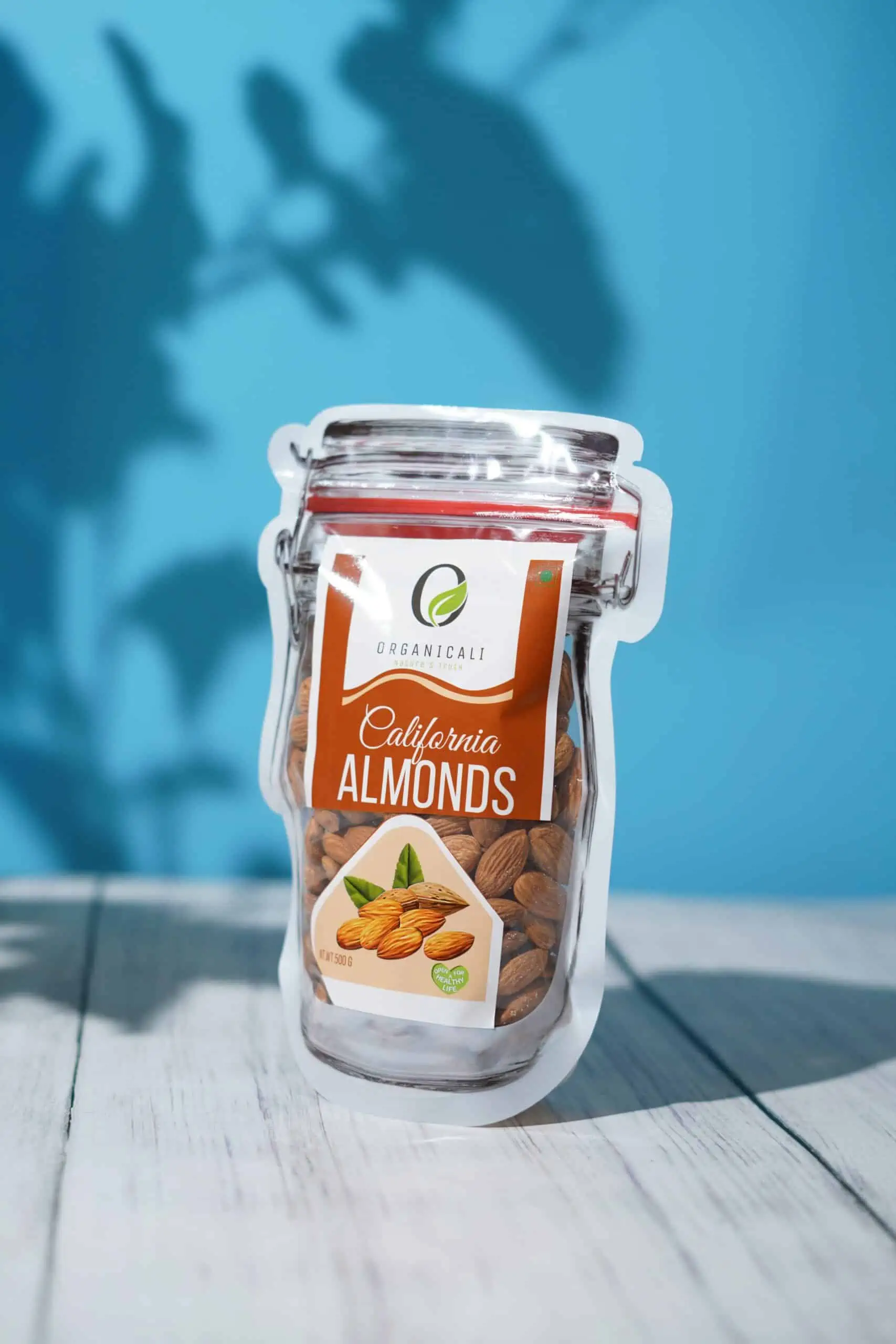

Bag size is decided by volume, not weight, so two products of the same weight often need very different bags.
A flat pouch has three seals and no gusset, so it uses the least film of any format. It lies flat rather than standing, and the product's thickness has to be wrapped as well as its face. Aim to fill roughly 70 to 90 percent of capacity: any lower and the bag looks half empty on shelf, any higher and it will not seal cleanly.
Takes about a minute. Not sure of the fill weight? Put one bag's worth in a ziplock and weigh it.
What brands ask before choosing a flat pouch: what it can take, how it compares, and what it costs to start.
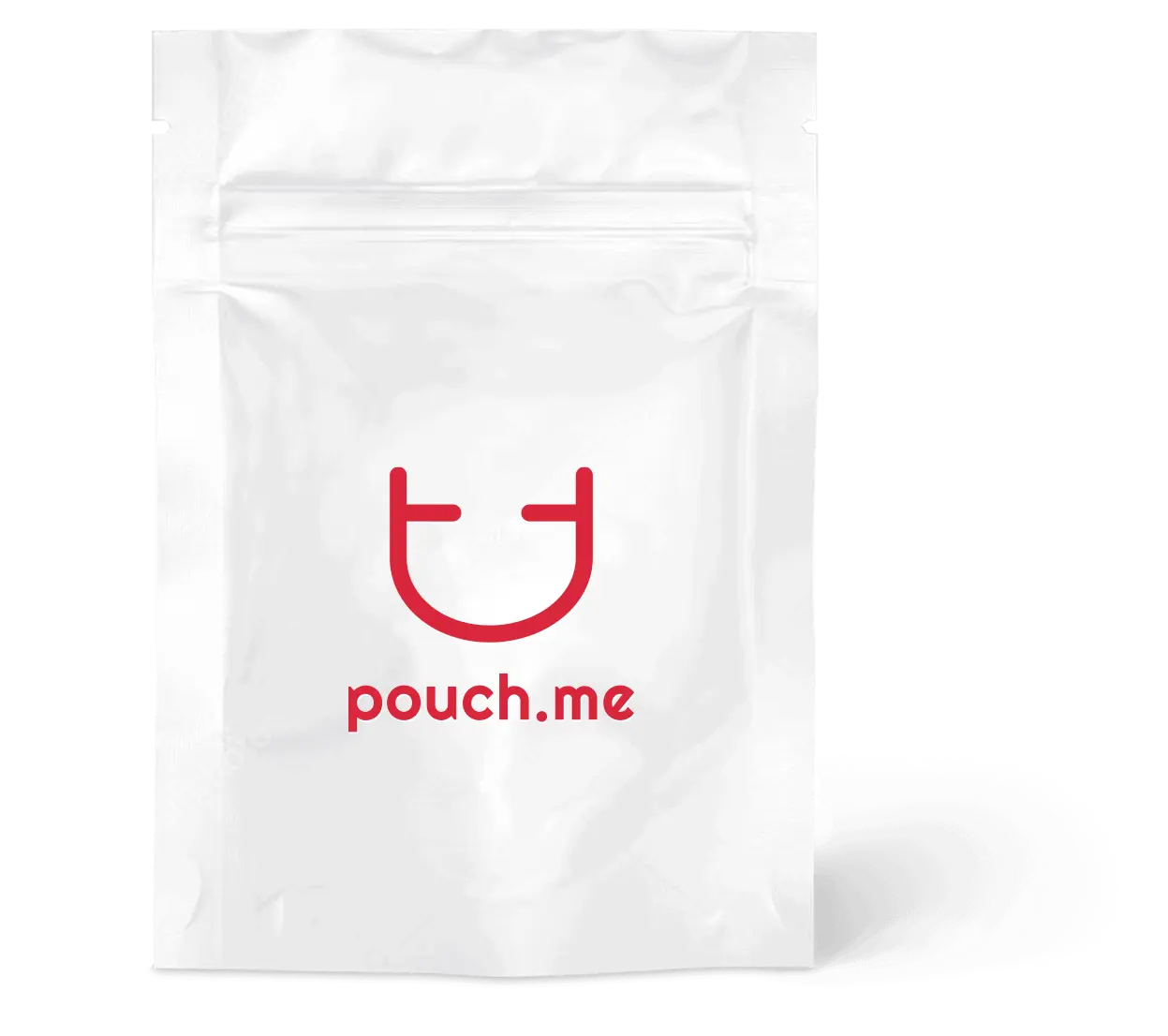
All three names describe the same construction. A flat pouch is sealed on the left, the right and one end, with the fourth end left open for you to fill. There is no gusset, so it lies flat empty and stays low profile filled. Small versions get called sachets and the industry shorthand is 3SS. It is also one of the two bags people mean by a lay flat pouch, the other being the fin seal pillow pouch. It uses very little film, which makes it one of the most economical bags we make.
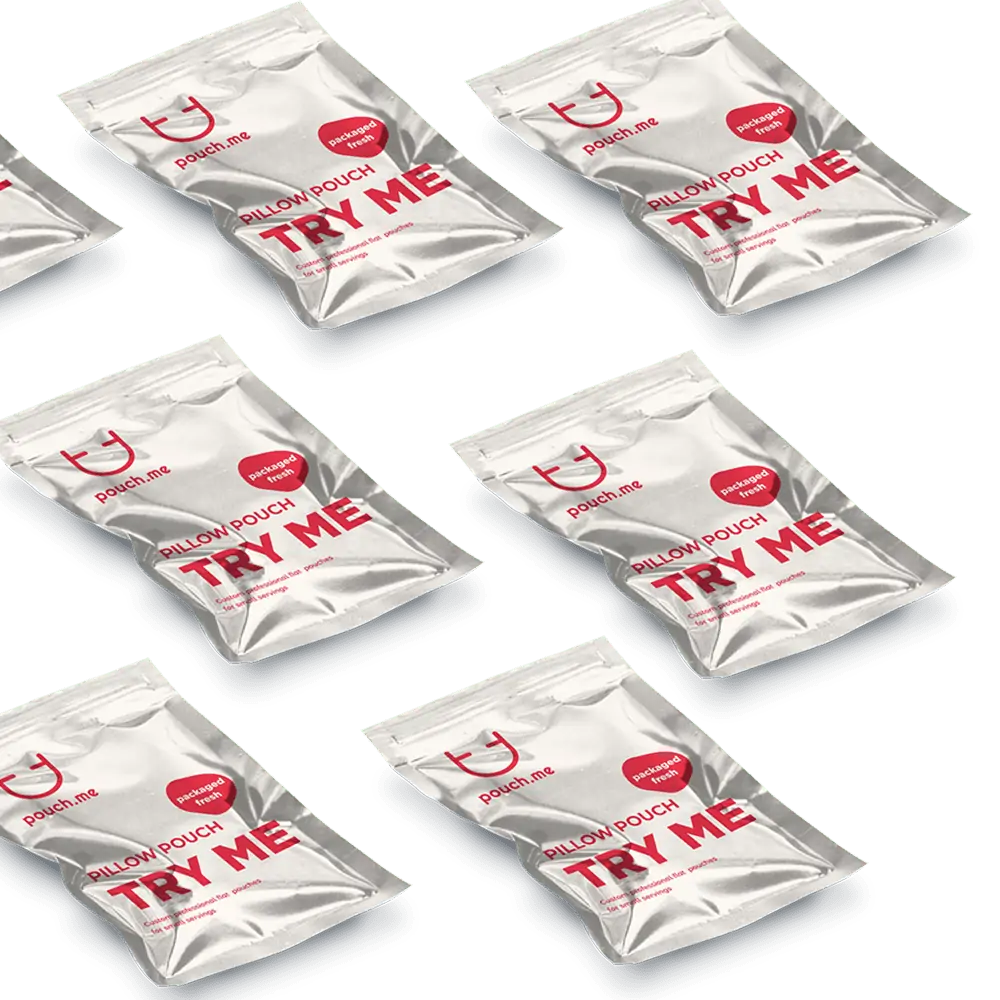
One hundred per design, printed to your artwork. We manufacture rather than resell, so a flat pouch order is a production run: your film structure, your size, your print, not a stock bag with a label on it. Pillow and stand-up pouches are also 100. Side gusset, quad seal and flat bottom start at 500 because those constructions take more converting. It counts per design, not per order, so a five variant range is five lots of 100. That is low enough to test a product on a shelf before committing to a full run of any one flavor.
No, and this is the single most common reason a flat pouch gets ordered by mistake. There is no gusset, so there is no base for it to stand on. It lies down, hangs on a peg, or sits face up in a bin or a display box, and for samples, single serves and anything sold off a counter that is the better answer anyway. If the bag has to hold a facing on a grocery shelf, you want a stand-up pouch, which has a folded base and starts at the same 100 per design.
Yes, and about 92% of the ones we quote have one. It is a standard press to close track, 3 to 5 mm wide. The wider e-zipper used on flat bottom and quad seal bags is not compatible with this construction. The bag has to be at least 4 inches tall and 3 inches wide to take a zipper at all, and a zipper costs 32 mm of height against 15 mm for a plain top seal, so size for it from the start. What it buys you is a pack your customer keeps in the cupboard rather than decants into a jar.
Because once the top is heat sealed there is no other way in. A flat pouch has no gusset to grip and no structure to tear against, so a notch is what stops your customer reaching for scissors, and about 94% of the flat pouches we quote carry one, the highest share of any format we build. A notch and a zipper work together rather than instead of one another: the notch opens the bag above the zipper the first time, and the zipper handles every time after that.
Yes, and it is one of the real advantages of this construction. A flat pouch is made from two separate webs sealed together, so the front and back can be different films: kraft on the front for a natural look with a clear back so the product shows, or kraft front and foil back when you need the barrier but want the paper face. A clear window is possible too, on about 16% of what we quote. A pillow pouch or a side gusset bag cannot do the mixed material part, because both are wrapped from a single web.
Yes, and it is your call rather than ours. Three of the four edges are sealed and the fourth is left open, and which edge that is depends on how your filling line runs and how the finished pack should read. Settle one thing at the same time: a hang hole has to sit on a sealed edge, never the edge you fill through, so a bag you fill through the top takes its hole in the bottom edge. Get that pairing wrong and the artwork hangs upside down on the peg.
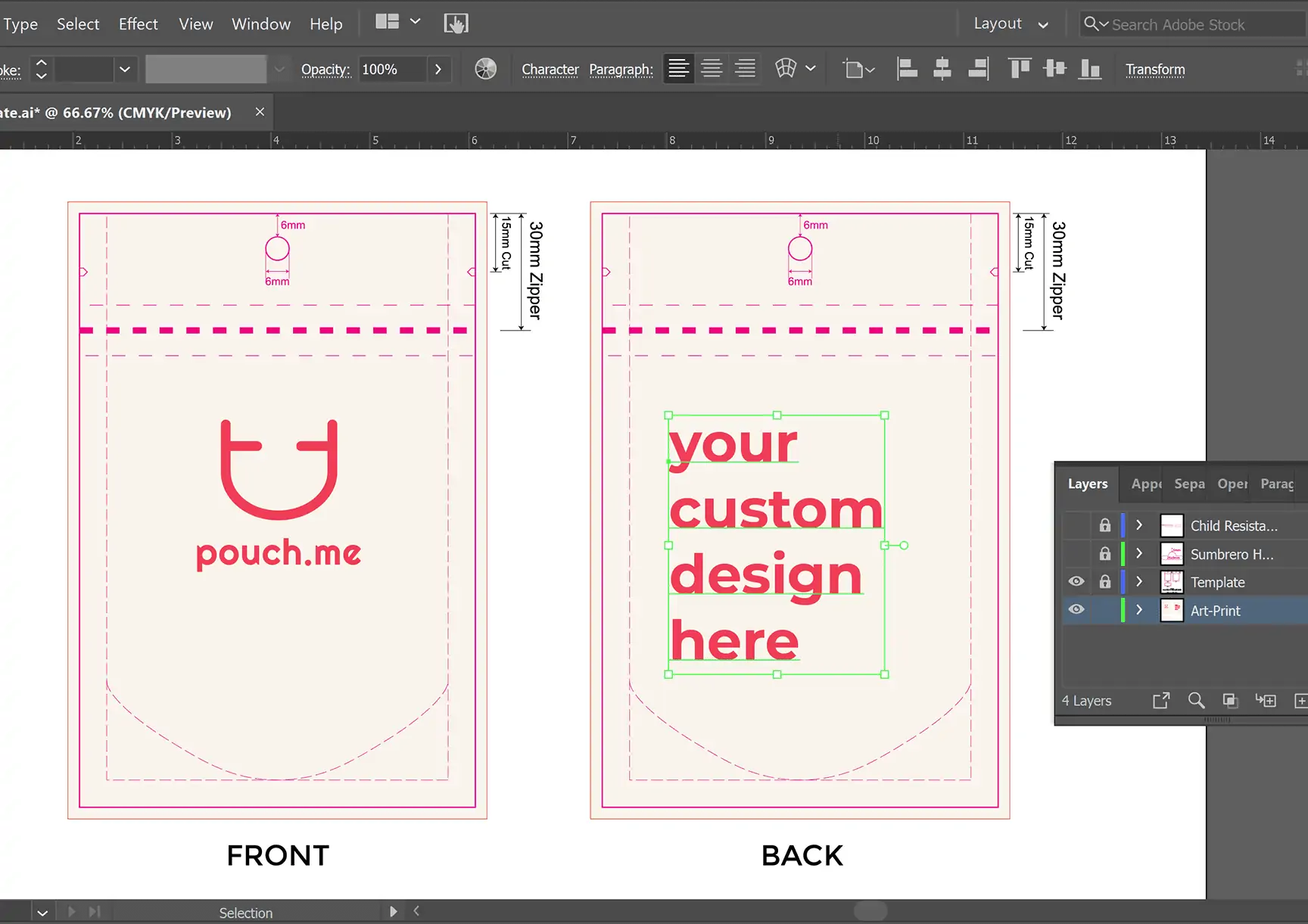
Six millimetres on each side seam, so a 6 inch wide bag has about 5.5 inches of usable width inside it. The end seal takes another 6 mm, and the top takes 15 mm for a plain heat seal, 32 mm with a zipper, or 37 mm with a zipper and a reinforced sombrero hang hole. Keep anything that has to be read about 3 mm inside the seal line as well. We send a dieline with the safe zone marked, so your artwork is laid out against real dimensions rather than the nominal size.