Products
Choose Your Custom Pouch
who we are
Resources
My cart

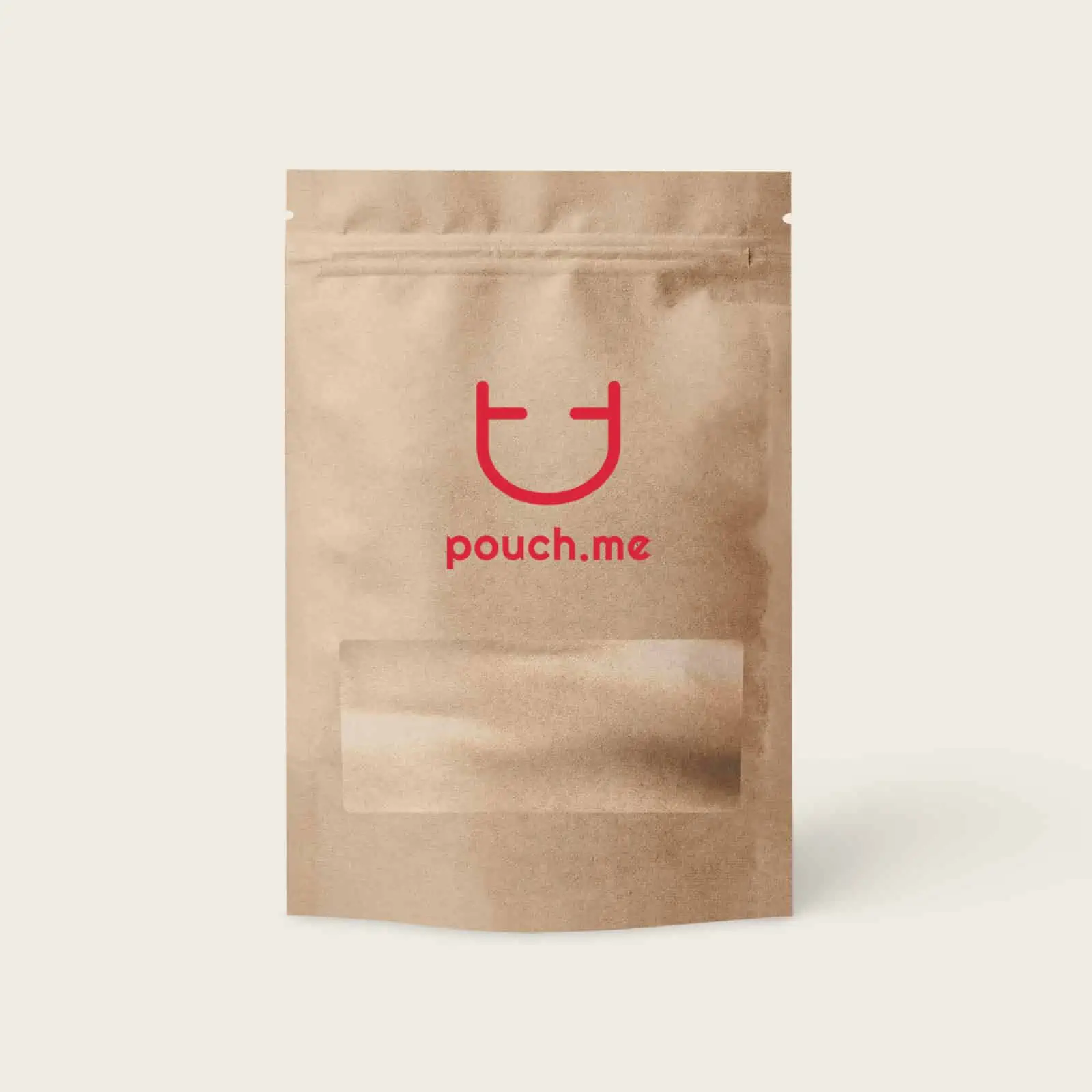
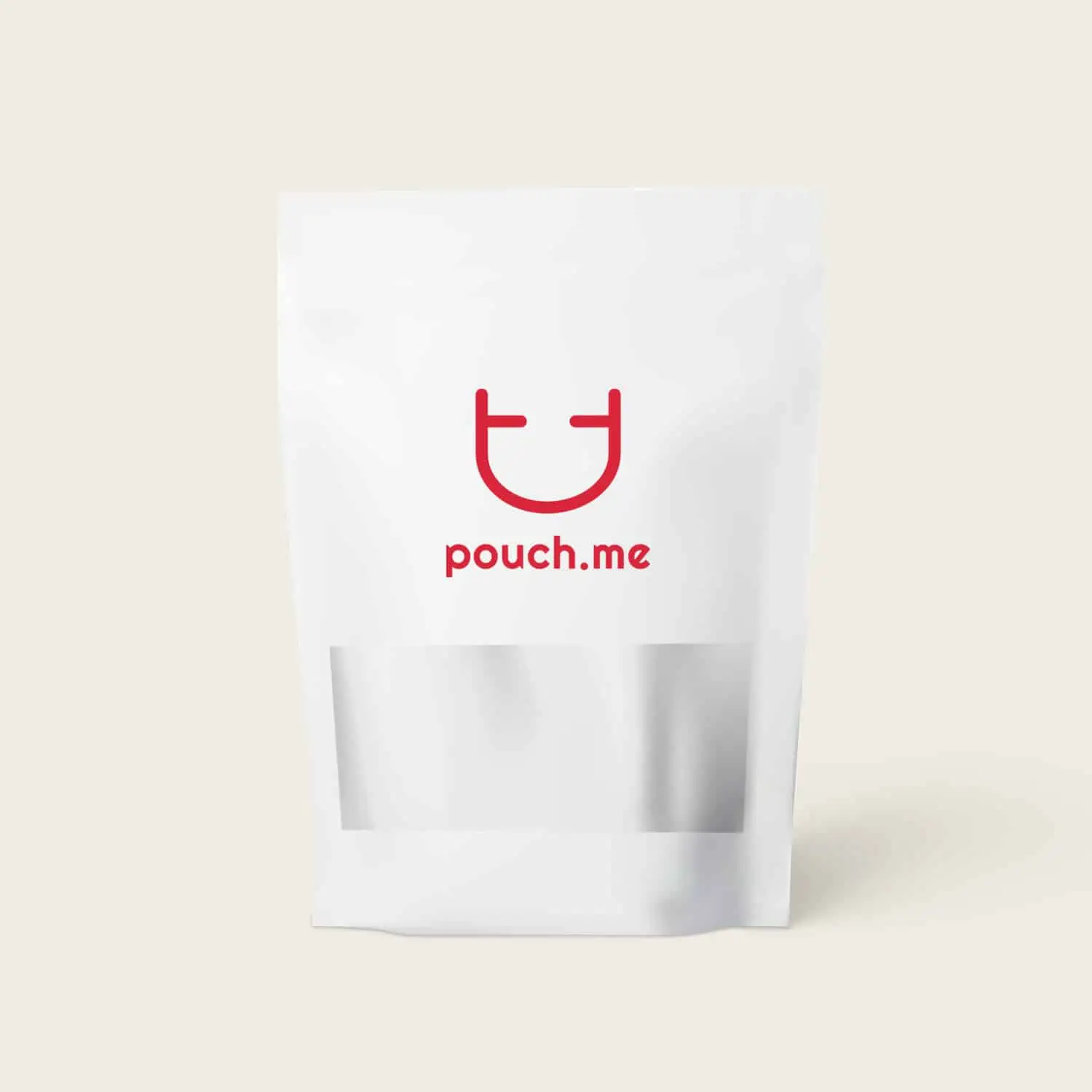
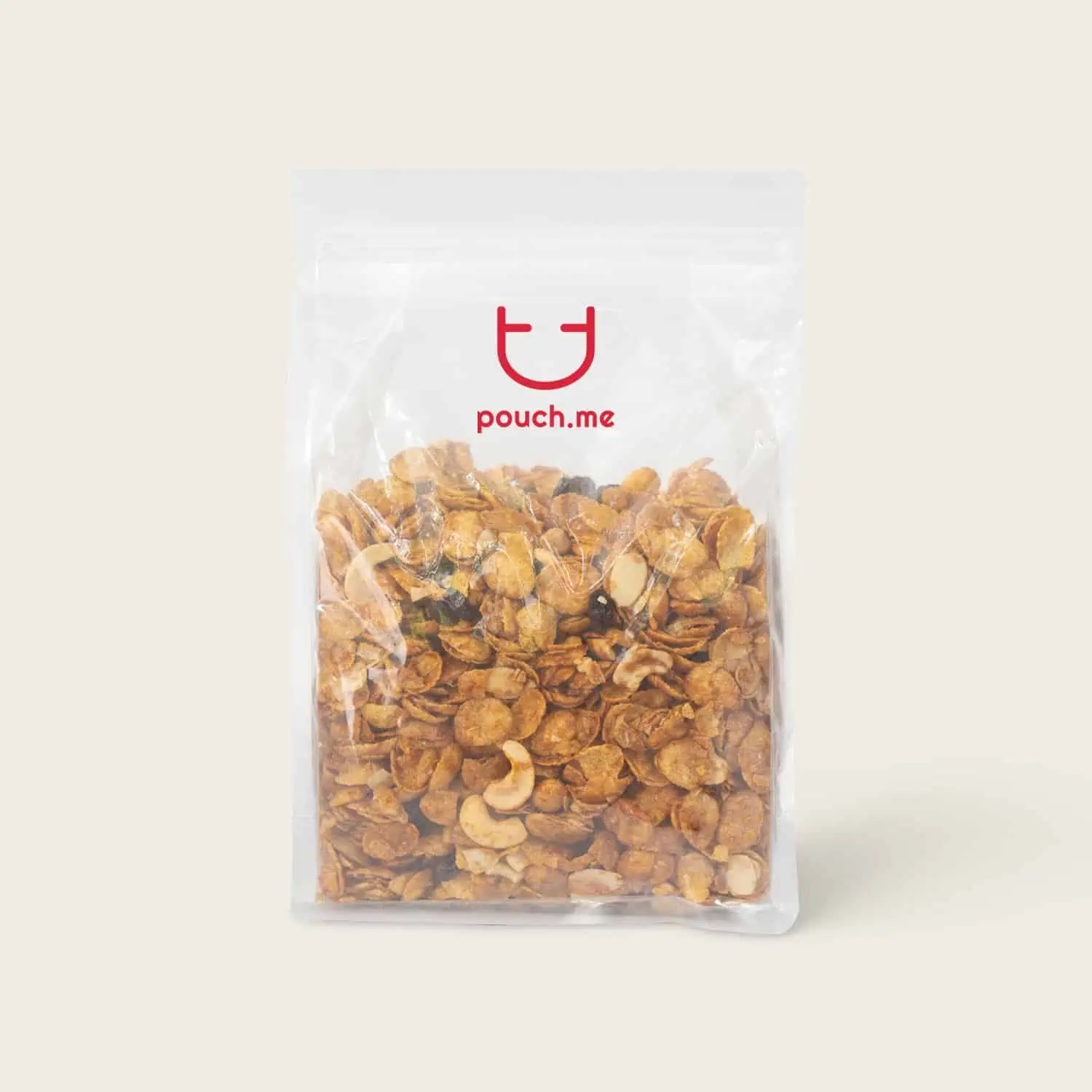




Bag size is decided by volume, not weight, so two products of the same weight often need very different pouches.
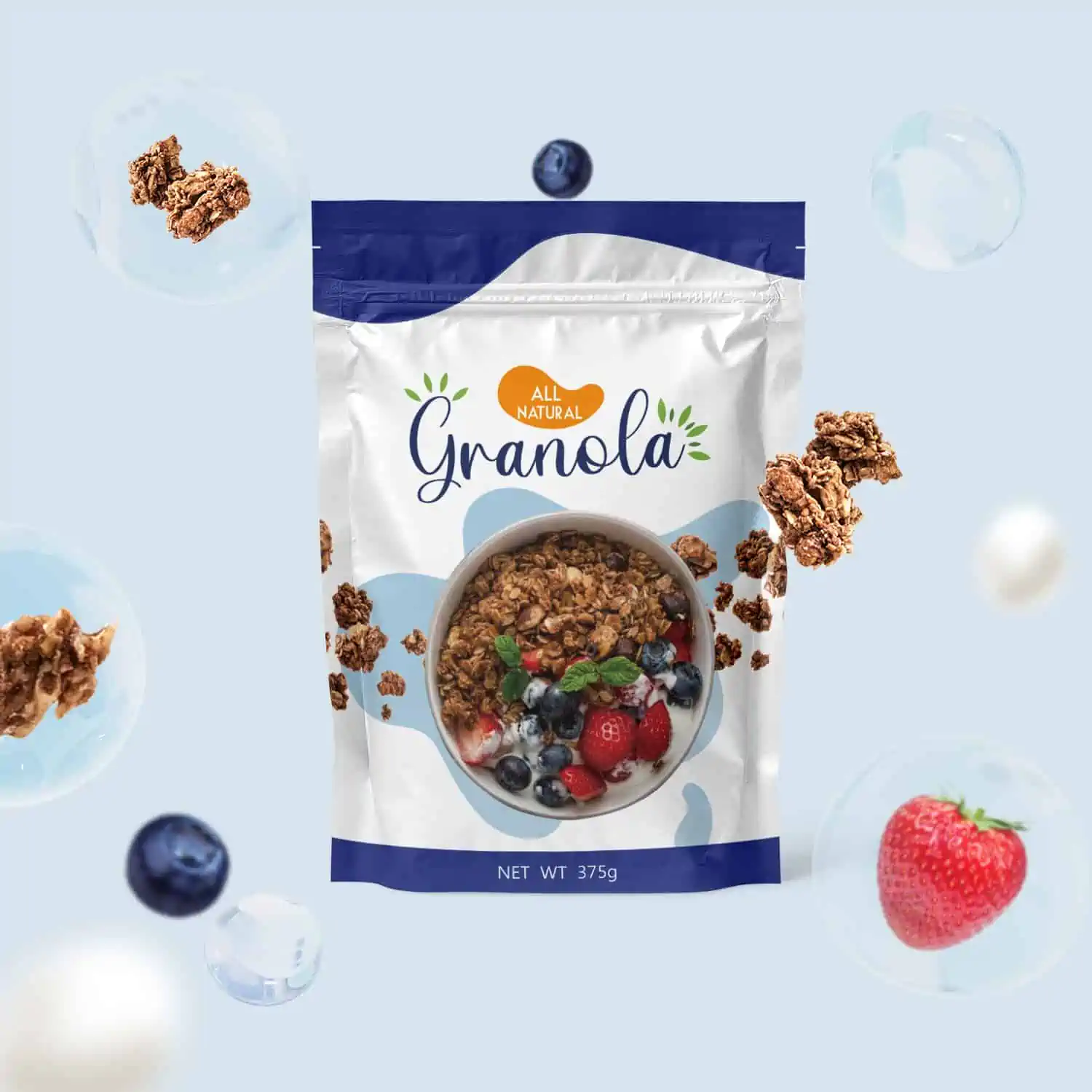
Granola and clusters are bulky for their weight and crush easily, so the bag has to be sized generously rather than tightly packed. Aim to fill roughly 70 to 90 percent of capacity: any lower and the pouch looks half empty on shelf, any higher and it will not seal cleanly.
Takes about a minute. Not sure of the fill weight? Put one bag's worth in a ziplock and weigh it.
| Dimensions | Pouch Spec | Zipper | Weight / Remarks |
|---|---|---|---|
| 2×3 | Flat Pouch With Zipper | Standard Zipper | Dime Bags |
| 3.75×4 | Flat Pouch | Child Resistant Zipper | 1g |
| 3.5×4.5 | Flat Pouch | None | 3 g / 1/8 oz |
| 3.5x6x2 | Stand Up Pouch | Child Resistant Zippe | 3 g / 1/8 oz |
| 4x6x2.5 | Stand Up Pouch | Standard Zipper | 7g / 1/4 oz |
| 4×7.25×2 | Stand Up Pouch | Child Resistant Zipper | 7g / 1/4 oz |
| 5×8.5×3 | Stand Up Pouch | Standard Zipper | 14g / 1/2oz |
| 5x8x2.5 | Stand Up Pouch | Child Resistant Zipper | 14g / 1/2oz |
| 6×9.5×3.5 | Stand Up Pouch | Standard Zipper | 28g /1oz |
| 6x10x2.5 | Stand Up Pouch | Child Resistant Zipper | 28g / 1oz |
| 12x9x4 | Stand Up Pouch | Child Resistant Zipper | Exit Bag |
| 12×19.5×4.5 | Stand Up Pouch | Standard Zipper | 1 pound - Tall pouch |
| 14x17x6.5 | Stand Up Pouch | Standard Zipper | 1 pound - Wide pouch |
What brands ask us before their first granola run: minimums, barrier, sealing and what actually keeps the product the way you made it.
It follows the format. Stand-up pouches, flat pouches and pillow pouches start at 100 per design. Flat bottom and quad seal bags, the square-shouldered formats a lot of granola brands want on shelf, start at 500 per design, as does side gusset. That is the real trade: a flat bottom holds a better facing in a row, and costs you a larger first run. Counted per design, three varieties at 100 each in a stand-up pouch is a 300-unit order, which is enough to test a range in a store.
Two failures to design against, not one. Moisture takes the crunch out, and that is what customers notice first. Oxygen and light turn the oils in the nuts, seeds and coconut rancid, and light drives that independently of oxygen, so a clear bag on a bright shelf works against you twice. A metallized structure handles both and is our standard here. With a high-fat granola we will put the opaque option on the quote beside a clear one, because it is the difference between a bag that eats fresh in month four and one that does not.
Granola is denser than it looks and much denser than chips. It sits near the top of the snack range, so a pound goes into a smaller bag than most people expect. It also packs efficiently and does not need the crush allowance a puffed snack does, so we fill it to around 70 to 85%. Send the weight and whether it is clustered or loose, or run it through our bag sizing tool. A well-filled bag looks like value on a shelf. An oversized one looks like you are selling air.
Yes, and granola is one of the products a window genuinely sells, because people buy on what the clusters look like and no photograph does that as well. The trade-off is that the window carries less barrier than the rest of the bag, so the granola behind it gets more light and more moisture. Keep it narrow, and off the panel facing store lighting if the mix is high in oil. On those terms you get the impulse buy and keep the crunch.
Either one. Both formats take a standard press-to-close zipper or a wider e-zipper, and the e-zipper is our default. Its track is easier to grip across a wide rectangular opening, which matters on a granola bag opened every morning for a month. Worth knowing before you compare quotes: an e-zipper has the opening function built in, so a tear notch and a perforation are not separate features on that bag and should not appear as extra lines. On stand-up and flat pouches the standard press-to-close track is the default.
Foil will not, because it is solid metal. Metallized film is usually said to be too thin to trigger a detector, and we have still seen it stop a customer's line, so we treat it as a risk rather than a certainty. If you fill at a co-packer, ask whether they run inline detection and tell us before we quote. Clear barrier films contain no metal and pass, and settling it on the quote is what stops a delivery arriving that your filler cannot run.
Yes, with the limits stated plainly. Recyclable here means made from one plastic family: mono-PE, optionally with an EVOH layer for barrier. Plain mono-PE is fair on moisture and poor on oxygen, which is thin for a high-fat granola. Mono-PE with EVOH is much stronger and is the one we would actually put against it. A standard PET/PE or metallized laminate is not recyclable, whatever else it does well. If the claim has to survive a retailer's audit, this is the film that carries it.
No. Design, prepress and shipping are free, and digital printing has no plate fee, so a second or third variety costs nothing extra to set up. Send an Illustrator file, a PDF or a Canva export, or just a logo and a rough idea, and we build the print-ready artwork onto the dieline for your size. You see a proof and approve it before press, so your money goes into the granola and the bags rather than into artwork bills and reprints.