Products
Choose Your Custom Pouch
who we are
Resources
My cart




Bag size is decided by volume, not weight, so two products of the same weight often need very different pouches.
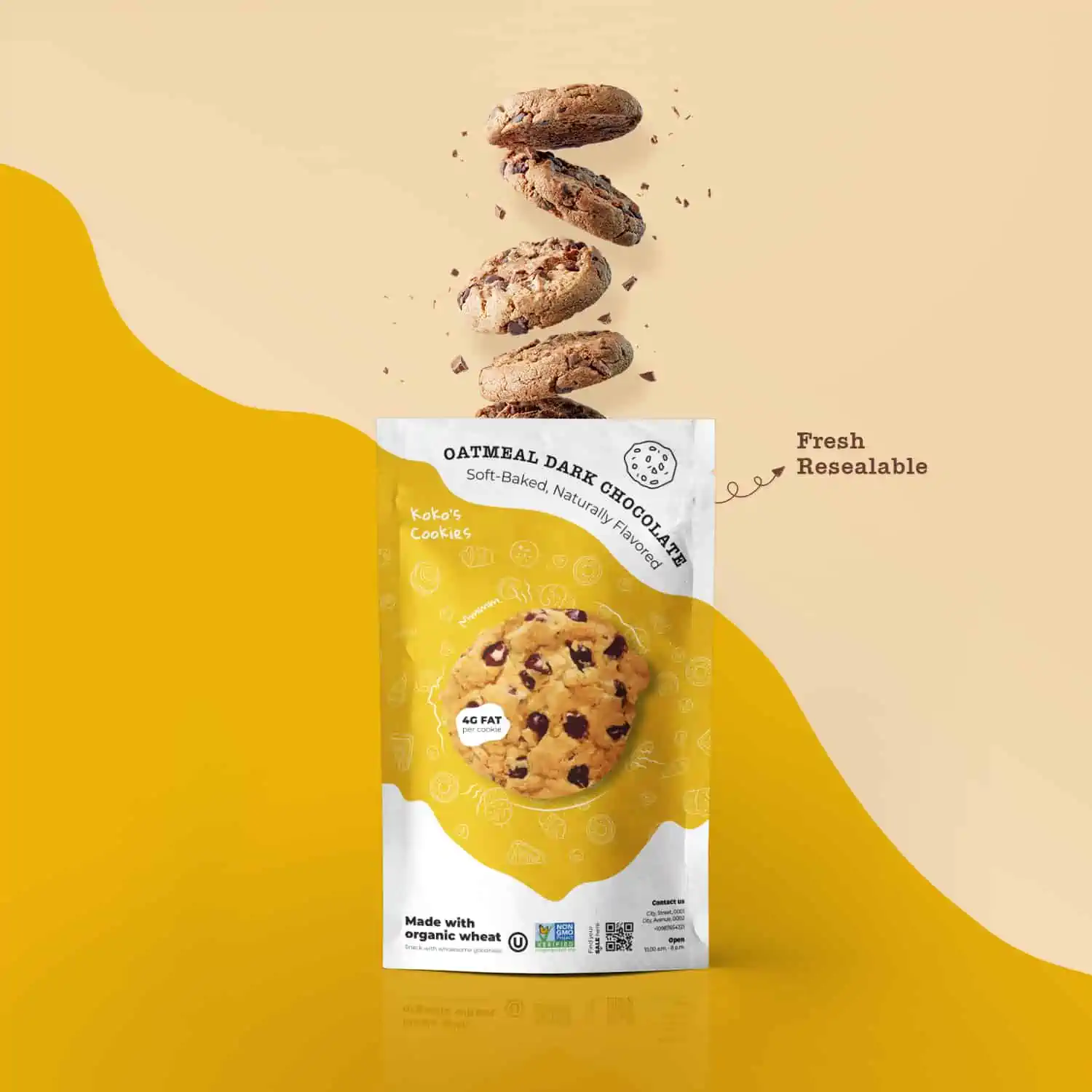
A cookie bag is sized by the biscuit, not the weight: how wide it is and how thick decide the bag, because the film has to wrap around the thickness as well as the face. Aim to fill roughly 70 to 90 percent of capacity: any lower and the pouch looks half empty on shelf, any higher and it will not seal cleanly.
Takes about a minute. Not sure of the fill weight? Put one bag's worth in a ziplock and weigh it.
What brands ask us before their first cookie run: minimums, barrier, sealing and what actually keeps the product the way you made it.
Weight will not do it. Twelve ounces of cookies could be six large discs or sixty minis, and those need completely different bags. What we need is one cookie's diameter and thickness, plus how many go in a bag. If they stack, say so, because a stack of six changes the depth. Our bag sizing tool asks for exactly that. Getting it right stops the two calls we hear most: cookies arriving broken because the bag was loose, and a bag that will not seal because it was tight.
They are the same problem pointing in opposite directions. A soft cookie loses moisture to the air and goes hard. A crisp cookie takes moisture in and goes limp. So the first question is which one you sell, because it changes the film. The barrier and the heat seal do that work: a zipper alone will not hold moisture in or keep it out once the bag is open. Get the film right and the cookie a customer eats on day ten is the one they bought on day one.
A laminate, usually three layers: a printed outer film, a barrier layer, and a food-grade polyethylene or cast polypropylene layer against the cookie. The middle layer is what changes. PET/PE is the basic clear version and is fine for fast turnover. A three-layer BOPP/PET/CPP film stays clear, costs a little more and holds texture much better. Metallized and foil films are stronger again but opaque, and kraft is paper with a barrier liner behind it. Glassine, cellophane and wax paper bags look lovely and have almost no barrier, which is why they suit a market stall rather than a store shelf.
One hundred per design for a stand-up pouch, a flat pouch or a pillow pouch, which covers most cookie packaging. Side gusset, quad seal and flat bottom bags start at 500 per design. The minimum comes from how the bag is built, so a home bakery ordering stand-up pouches is at 100 however many cookies go in each one. Each design counts on its own, which means you can put a real printed bag on a market stall or a first wholesale order without ordering a year of stock.
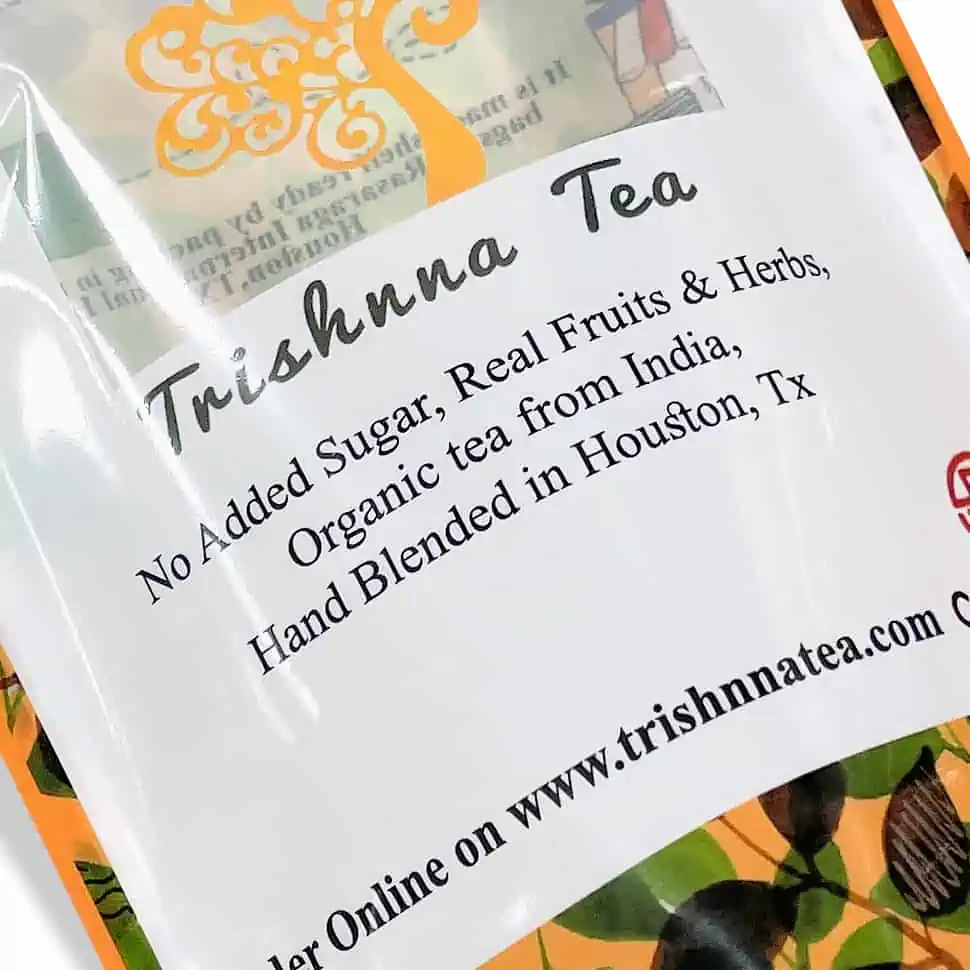
Yes, and cookies are one of the products where it genuinely sells, because people buy with their eyes and a window does work your photography cannot. The caveat is that a window carries less barrier than the rest of the bag, so the cookie behind it dries or softens first, depending which way your moisture runs. Keep it small if the cookies sit for weeks, and on anything with chocolate keep it off the face pointing at store lighting. On those terms you get the sale and keep the texture.
Only if the customer will not finish the bag in one go. A multipack or a large share bag earns a zipper and gives your customer a reason to keep the pack rather than tip it into a jar. A single-serve or a gift bag does not, and skipping it takes cost out of every unit. Be clear on what it does: a zipper reseals, it does not seal. The pack is airtight because the top is heat-sealed above it. A pillow pouch cannot take one at all.
Yes. The layer against the cookie is food-grade polyethylene or cast polypropylene, and the print sits on the outside of the laminate with the barrier layers in between. We can supply a Certificate of Analysis, a food contact declaration and a safety data sheet on request. That is what a farmers market organizer, a co-packer or a retail buyer asks for, and having it ready is often what gets you the listing. Your own cottage food licensing and label content stays with you.
Yes, and digital printing means a second design carries no plate cost. The 100-unit minimum applies per design, so a seasonal range of four is four lots of 100 rather than one run split four ways. Design and prepress are free, so there is no setup penalty for splitting a run across several artworks. That is what lets a small bakery run a Christmas bag, a Valentine's bag and an everyday bag without three separate setup bills. Each comes back as a proof before printing.